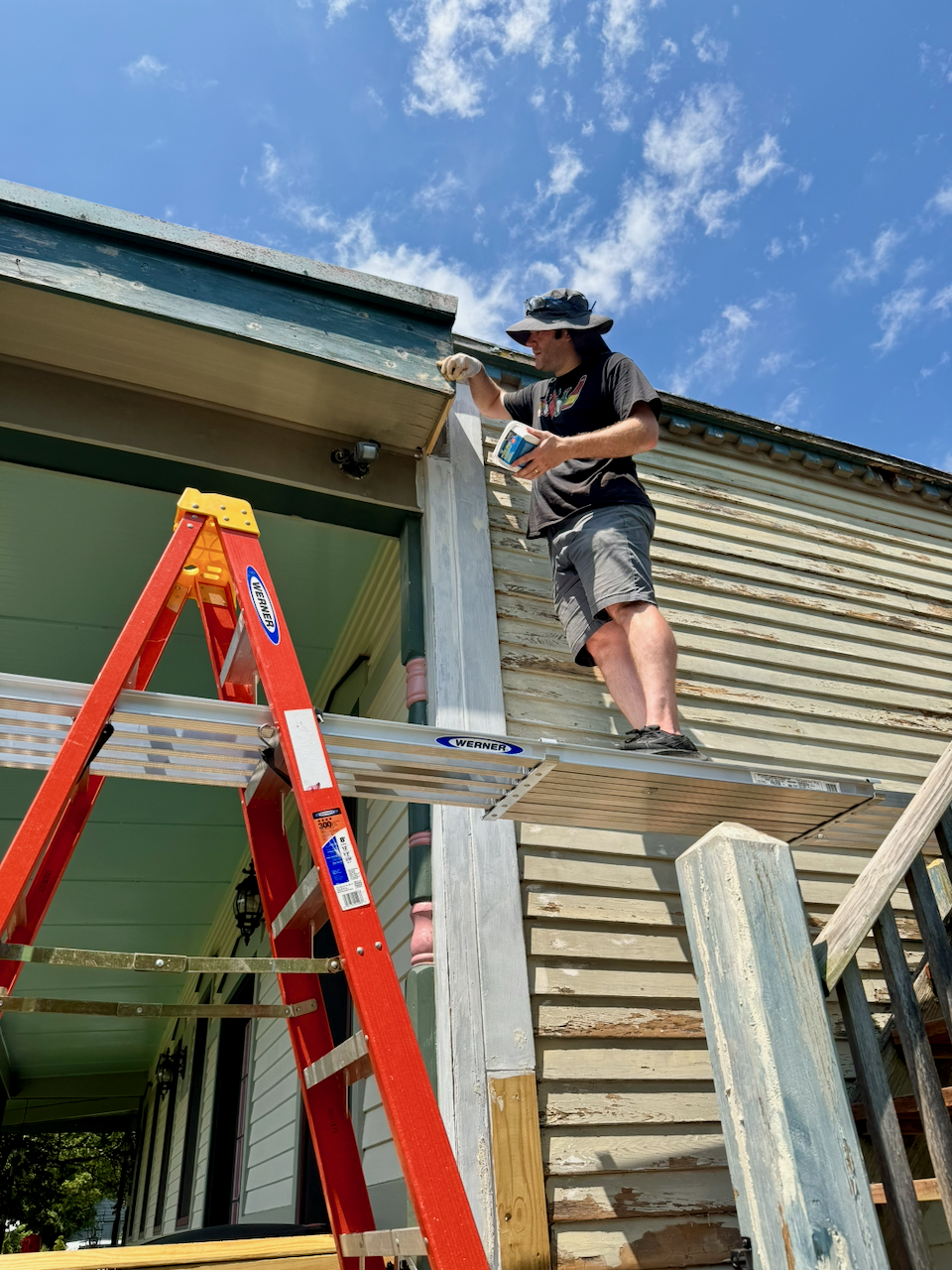
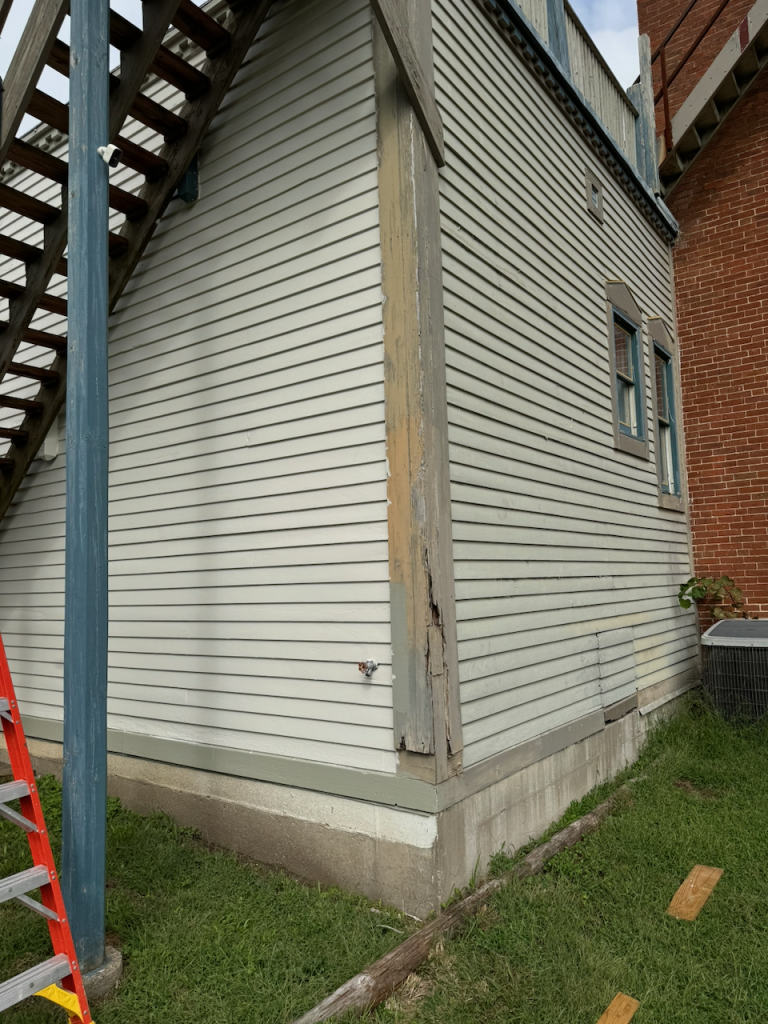
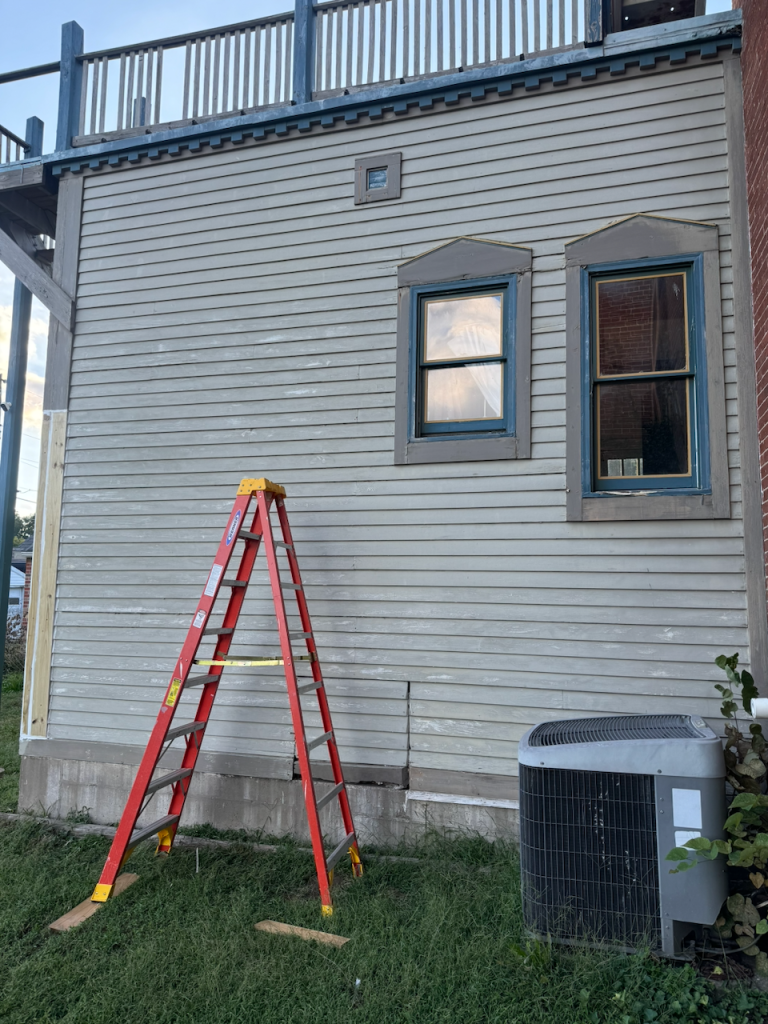
When we made the Herzog Mansion home in 2019, the south side was in rough shape. One family member took a look and said, “I’d have nightmares.” He was right. I’ve had a few.
Built in the 1980s, this all-wood addition takes a beating from the Missouri sun. Many owners might have replaced it with vinyl, but we’re committed to restoration.
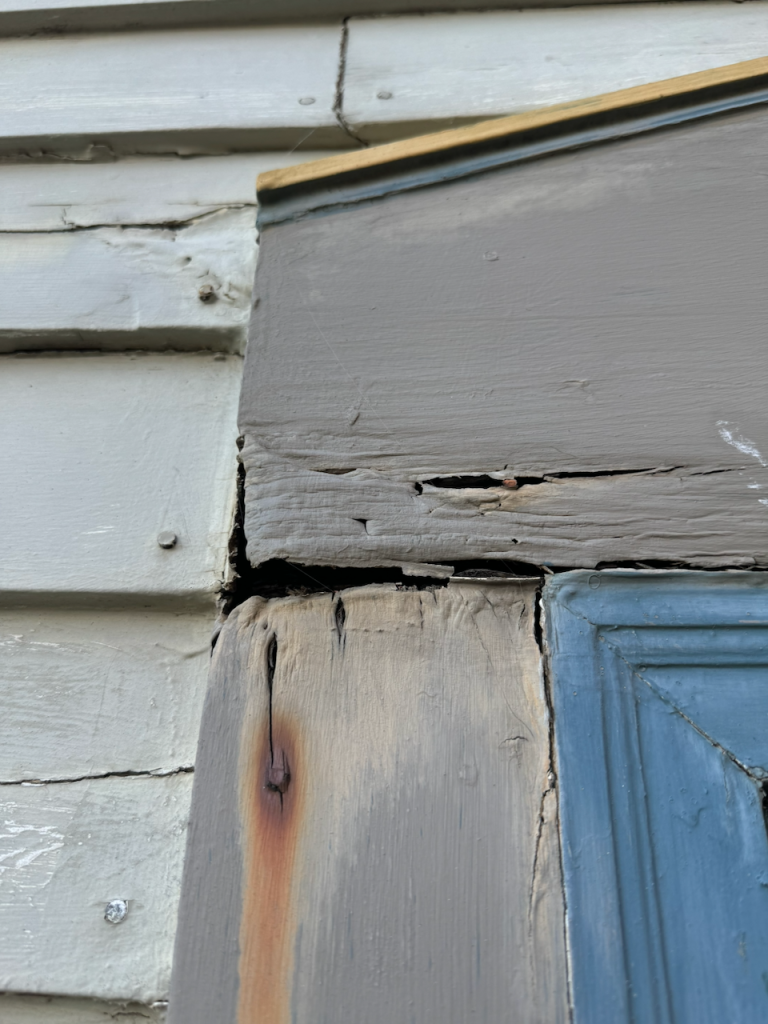
The first step is repairing the rot. We’re replacing larger sections of trim with treated wood and restoring what we can with Abatron WoodEpox. Then comes primer, caulk, and two coats of paint.
One goal of this post is to show that even intimidating wood rot can be repaired. Keeping it from returning requires the right materials, sound techniques, and a little maintenance each spring.
Here’s a peek at what we’re tackling in this blog post:
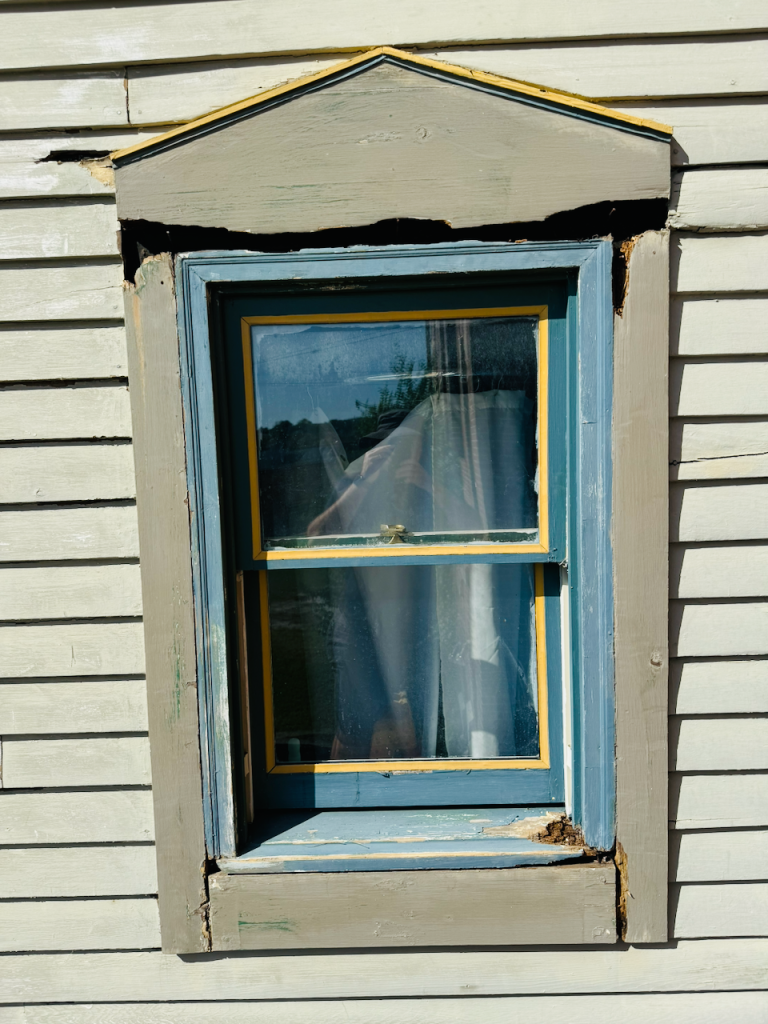
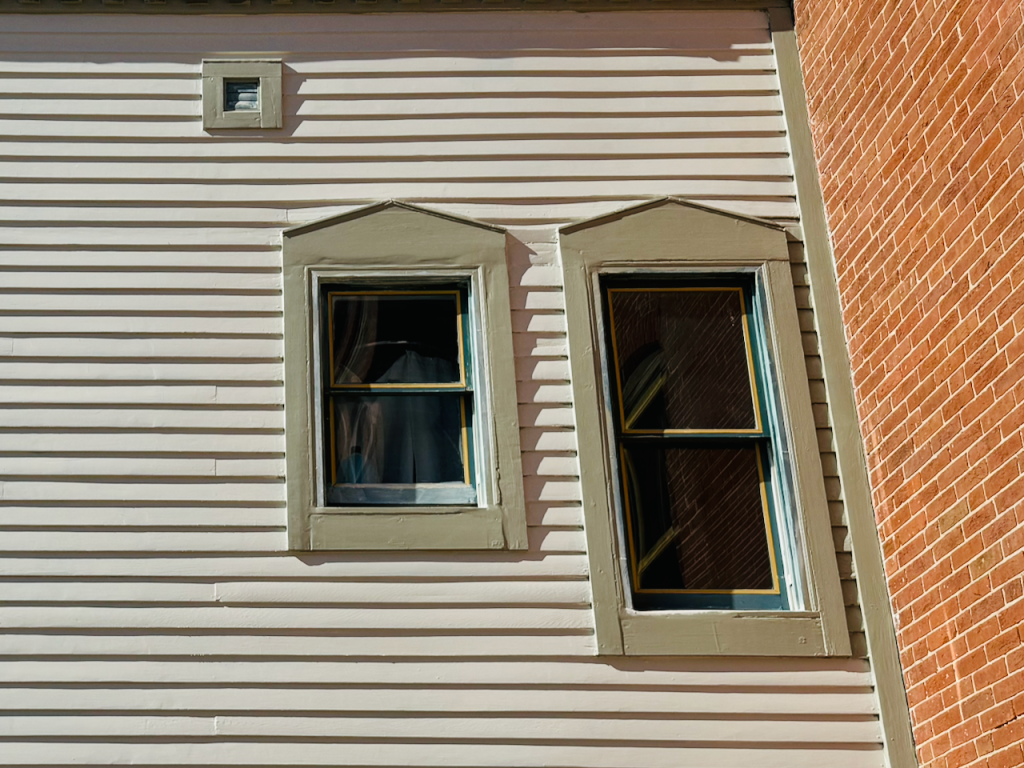
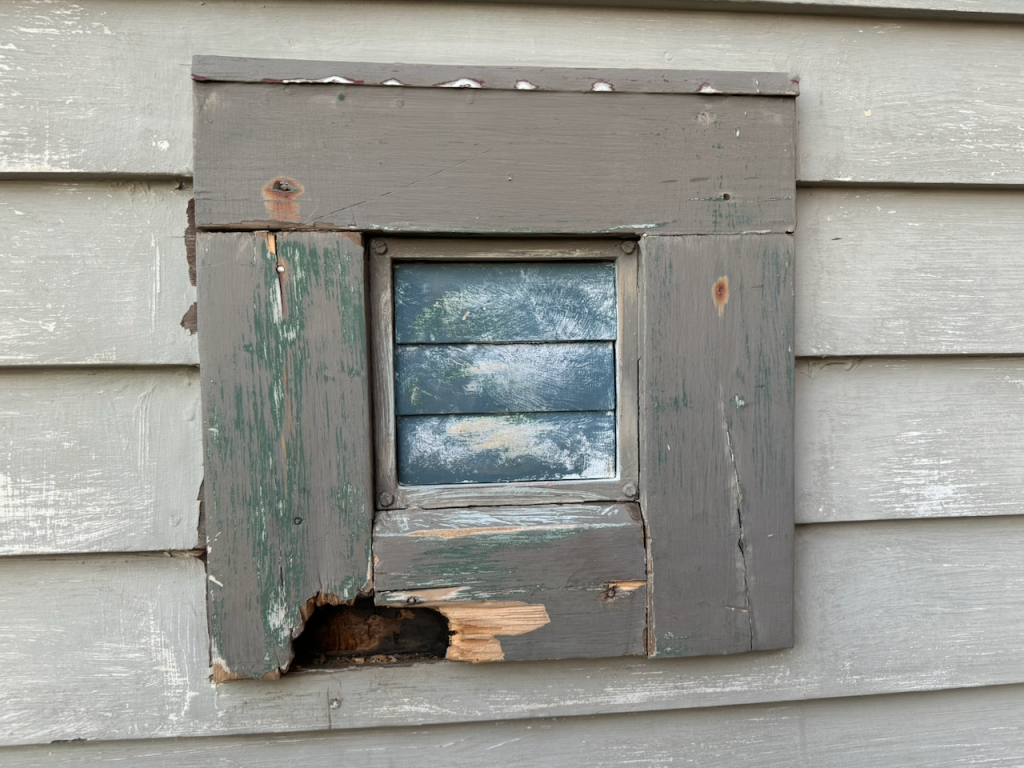
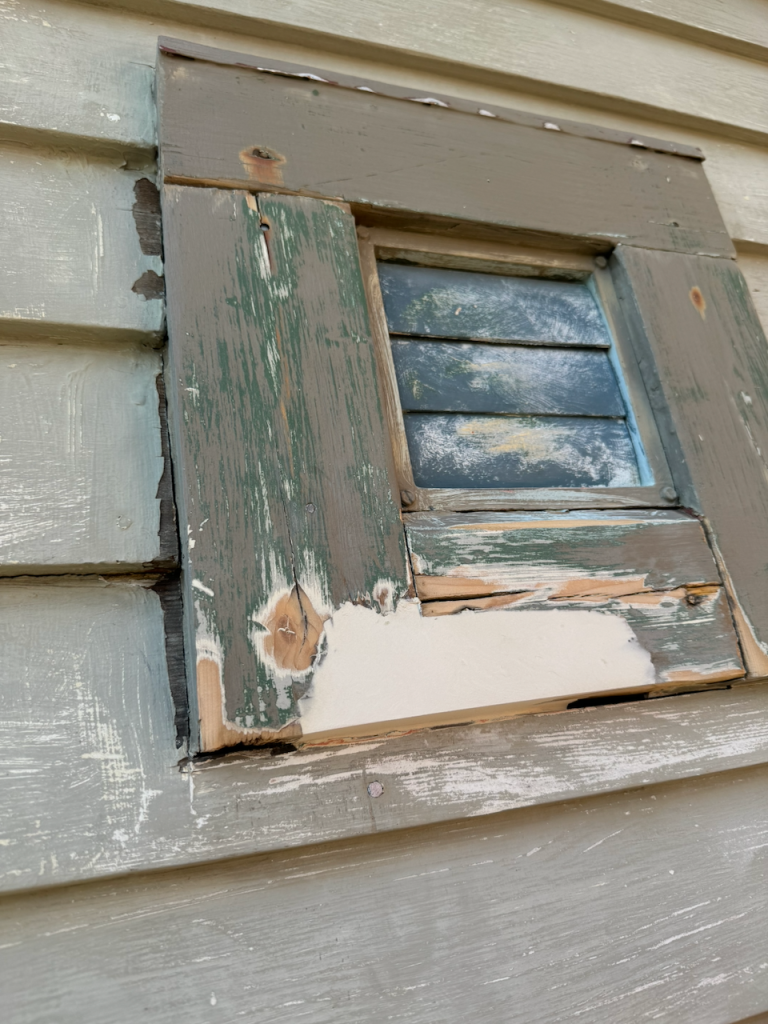
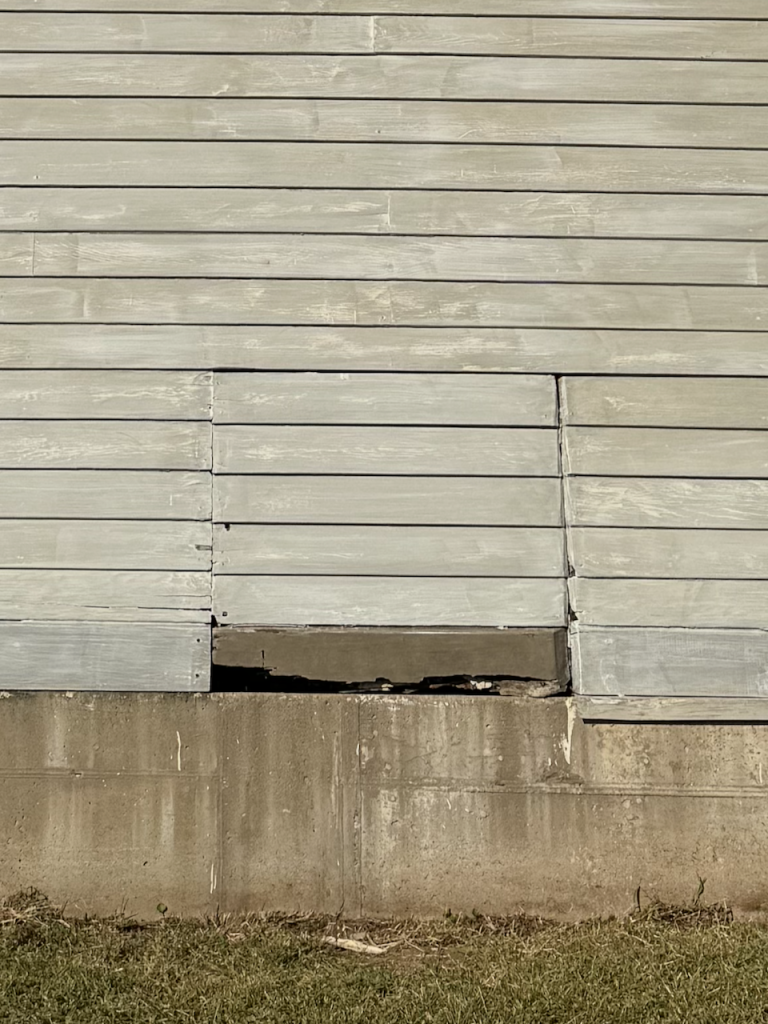
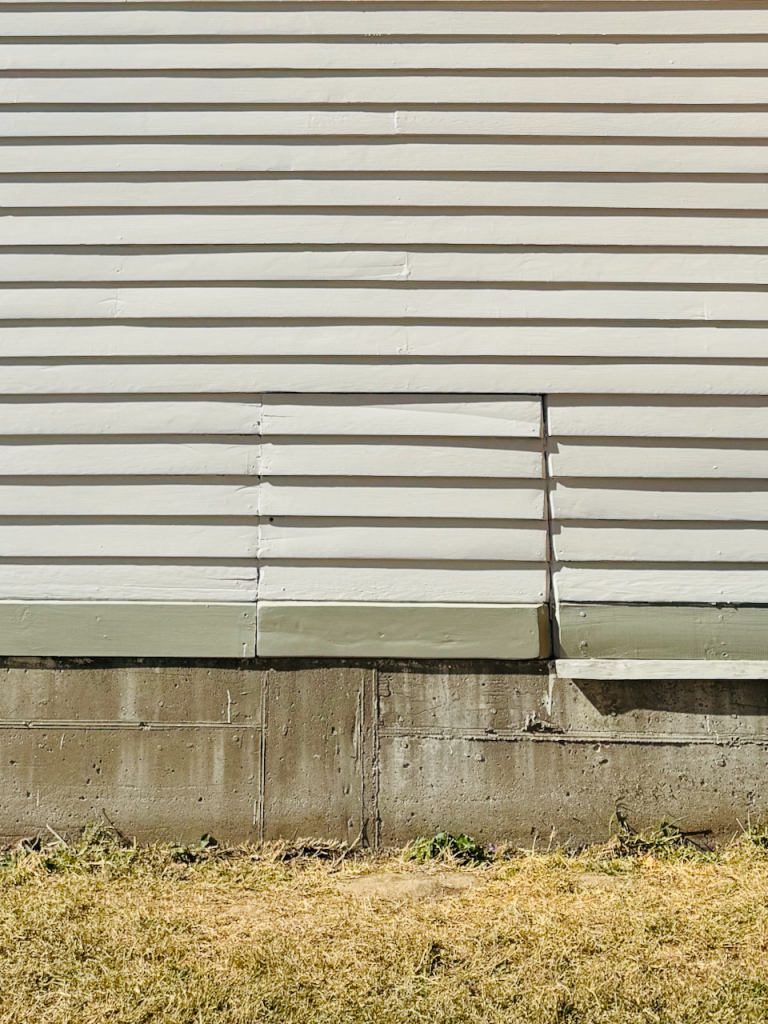
But first, a word from our sponsor…
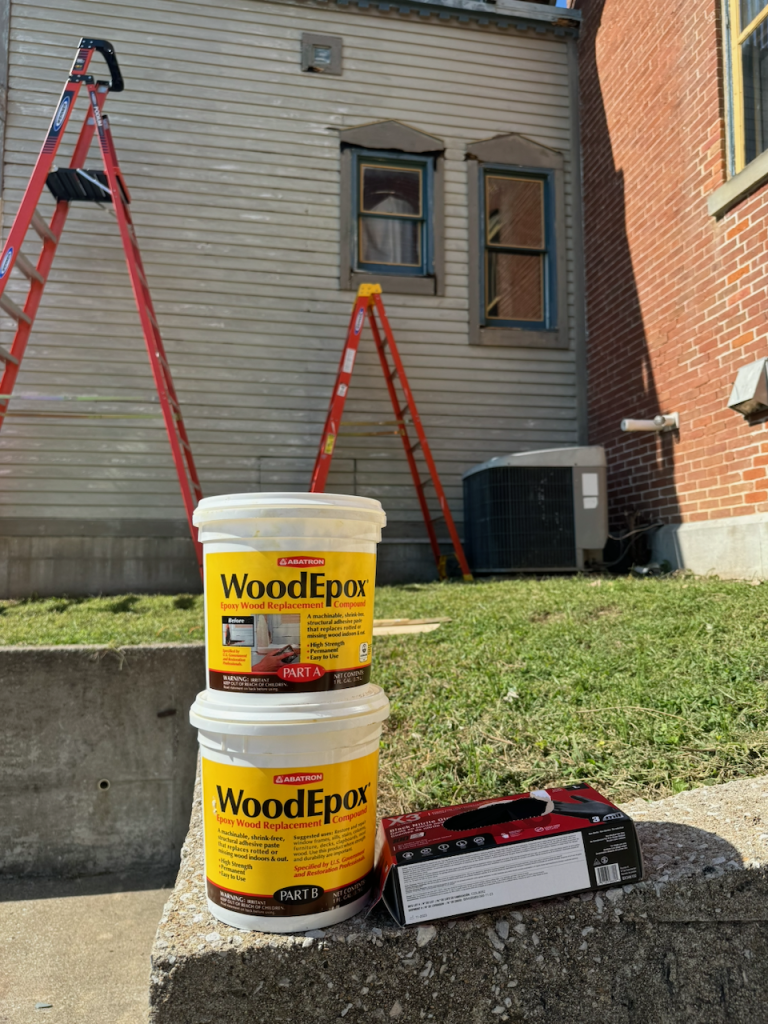
Just kidding, though it sure would be nice! 😅
We’ll talk more about Abatron and why we use its products as we get further into the restoration.
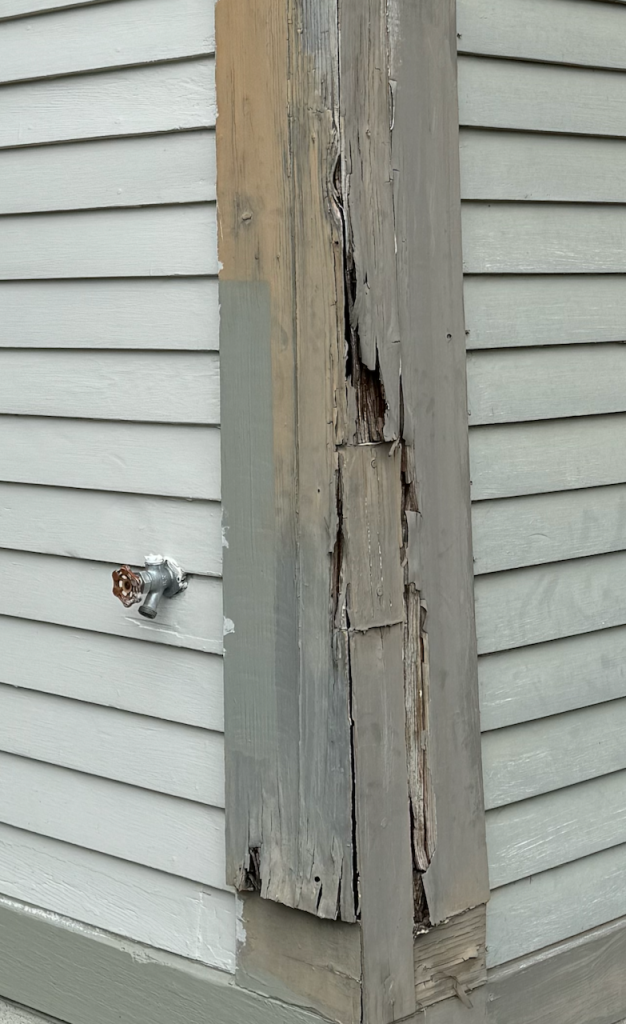
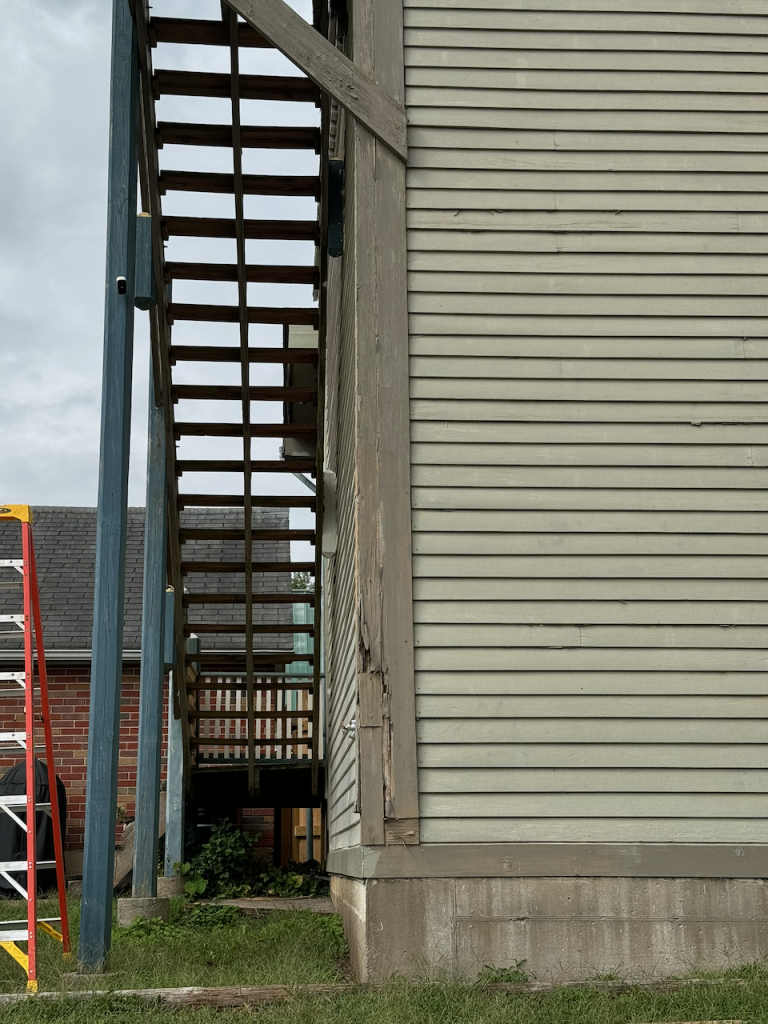
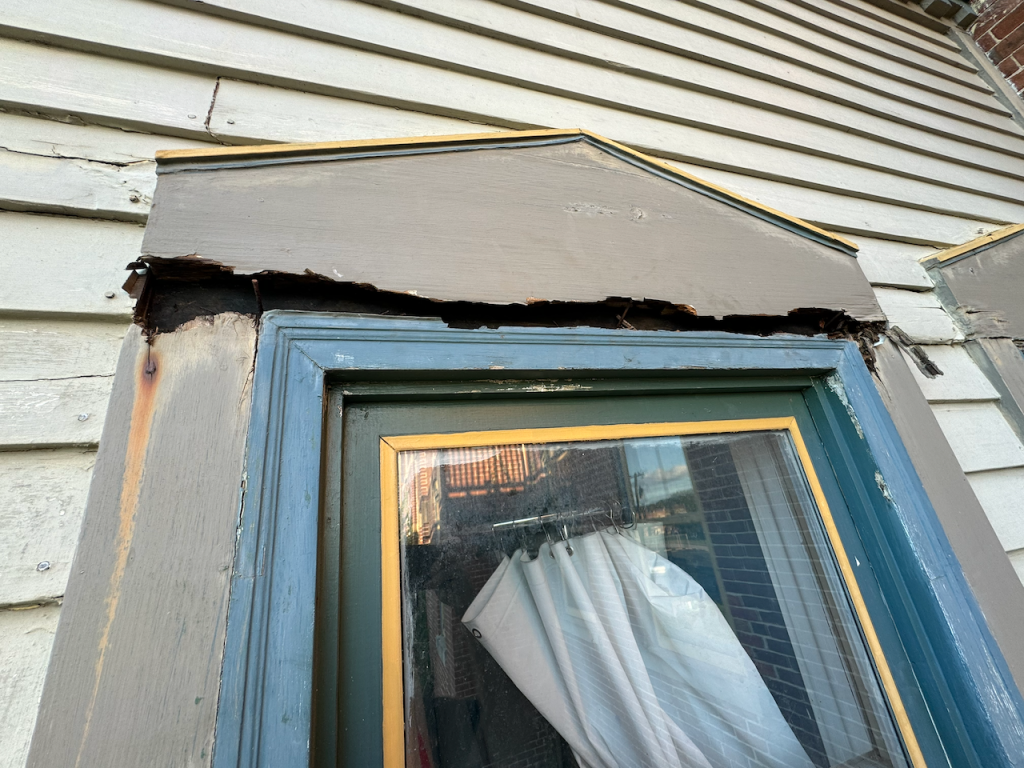
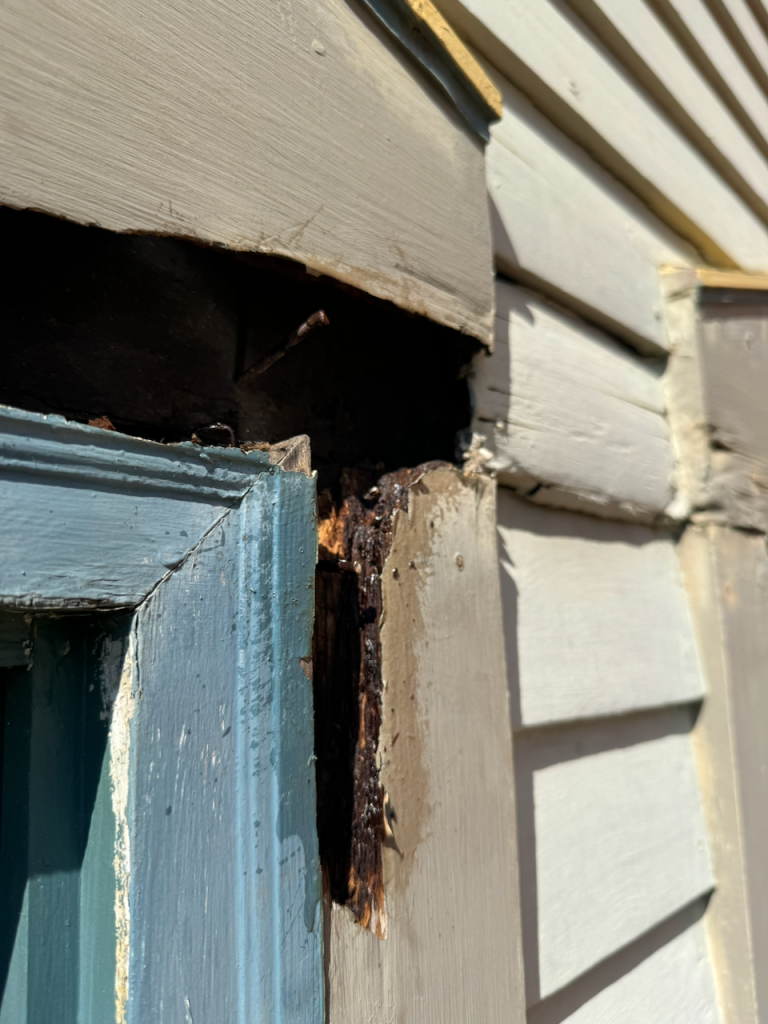
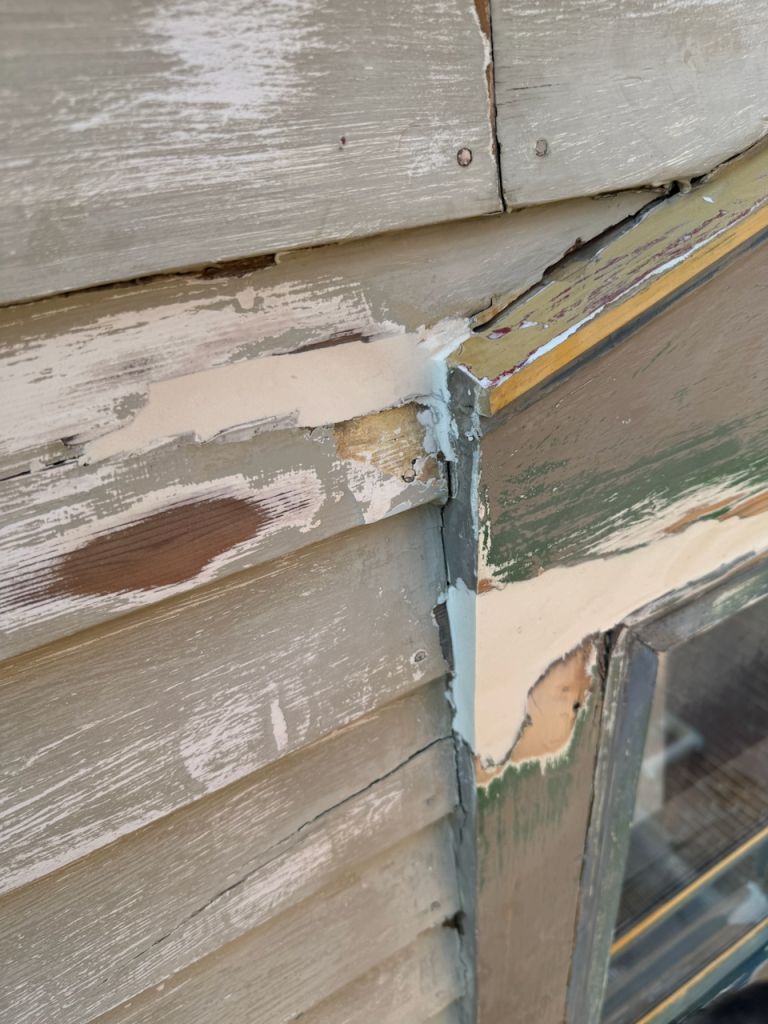
First up is the south-side trim where the porch roof meets the siding. As you can see, it was in rough shape.
The real problem was the flat-roof transition, which had effectively become a waterfall. Every time it rained, water ran down the trim and fed the rot. Before repairing any wood, we installed flashing to redirect the water away from the trim and where it needed to go.
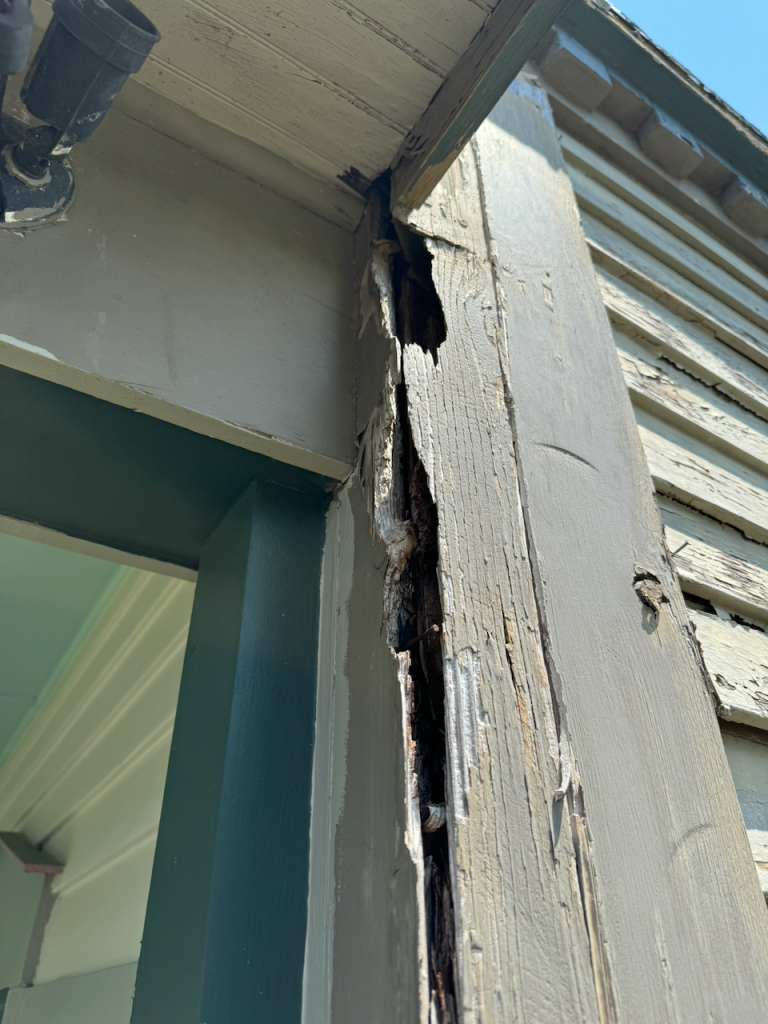
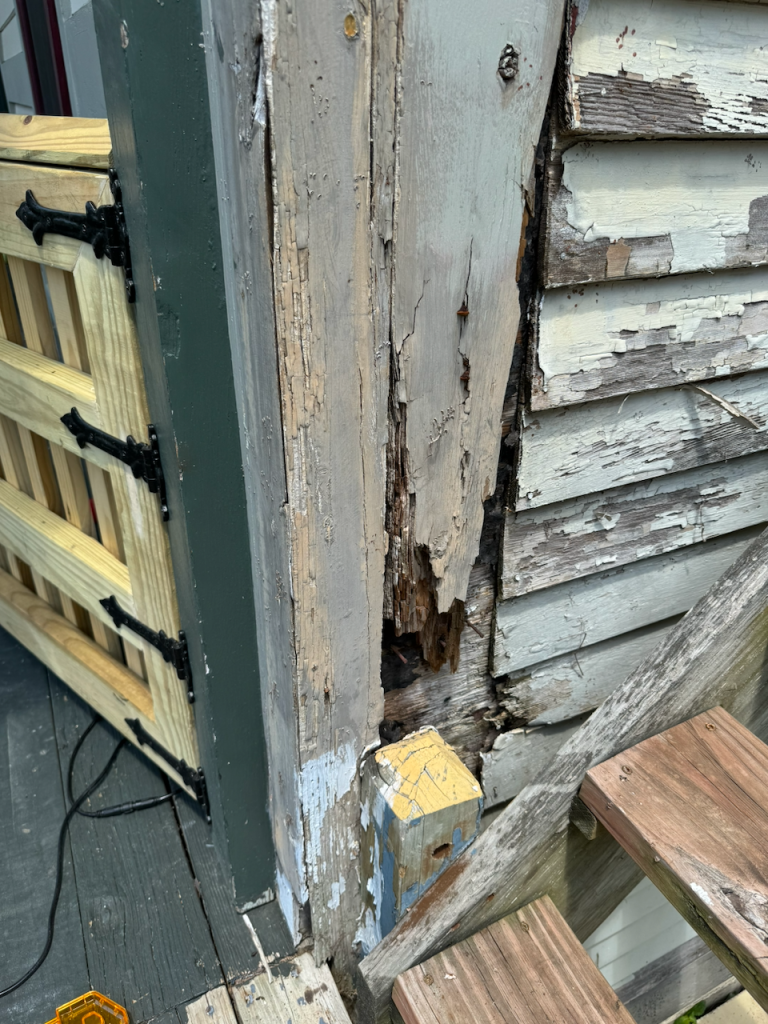
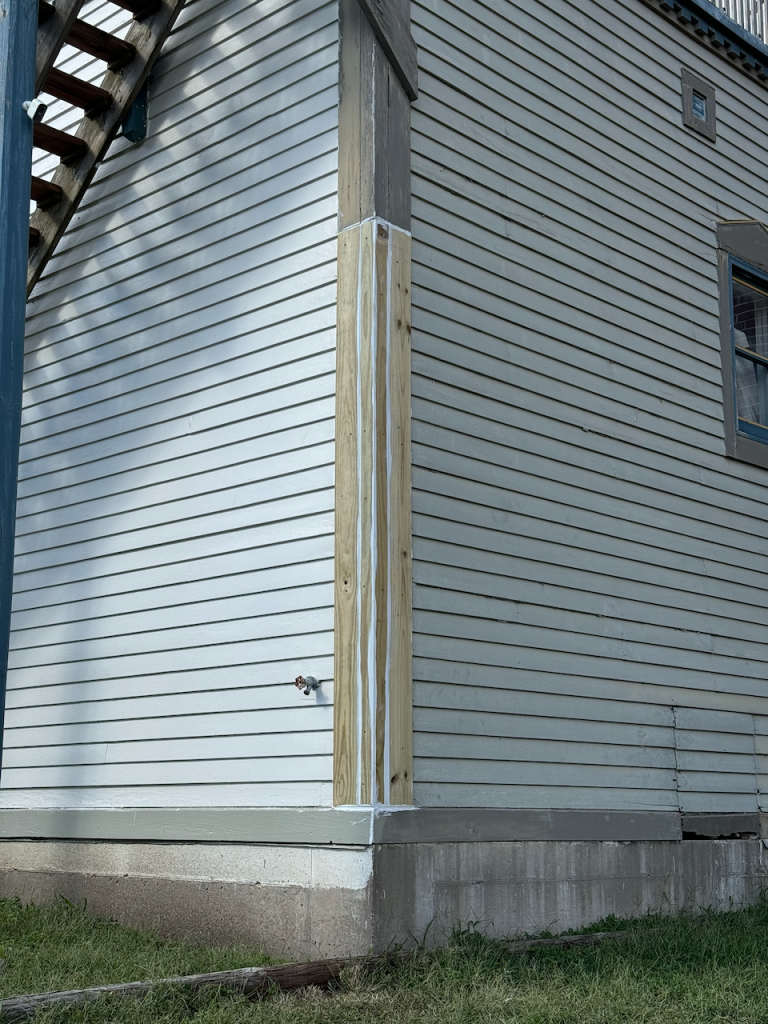
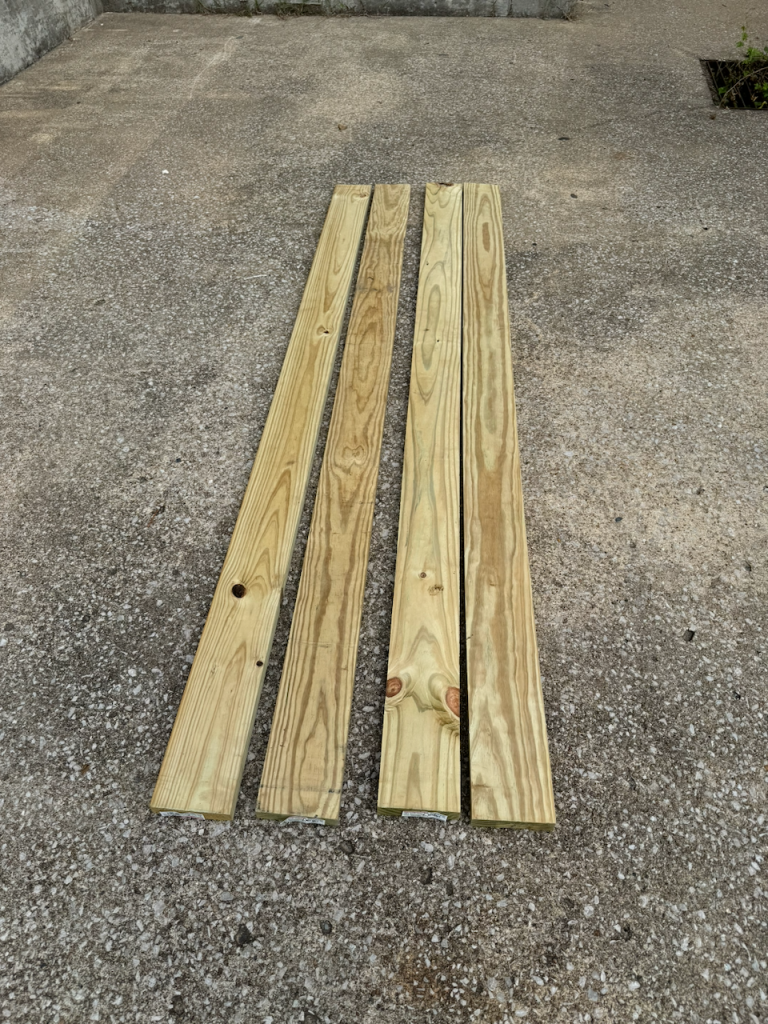
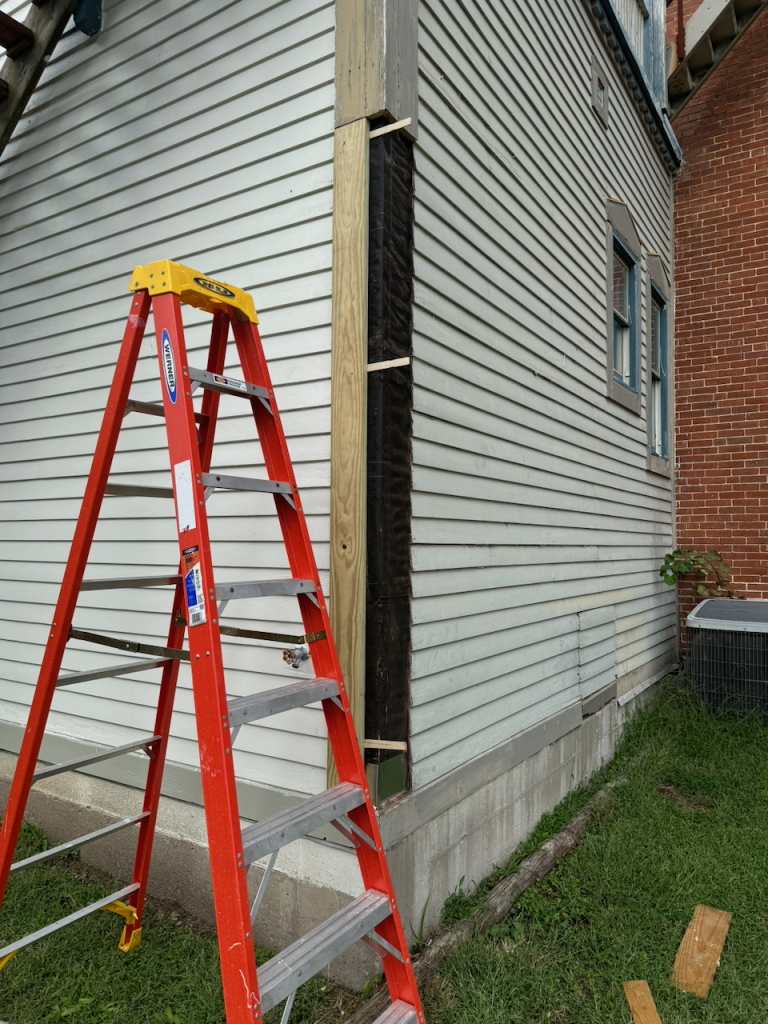
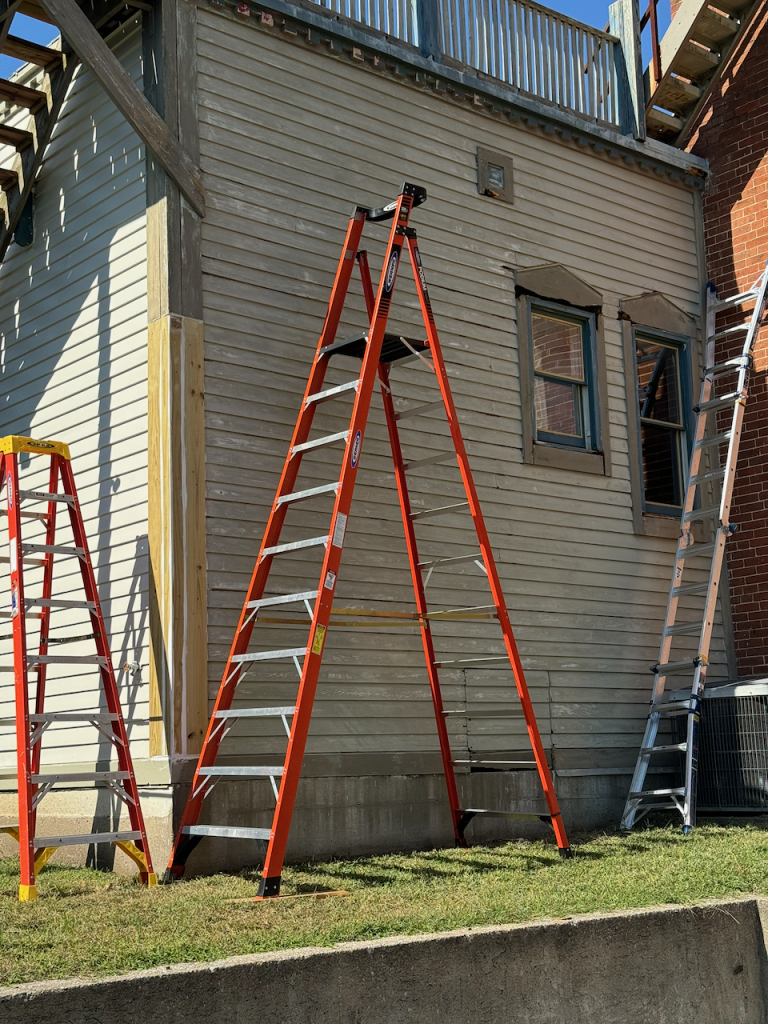
Tackling this much wood rot takes planning. Here, we’re replacing the worst sections of trim with treated lumber and patching what can still be saved. Then comes scraping, sanding, priming, caulking, and painting.
And, if we’re being honest, more scraping and sanding, followed by more scraping and sanding. You get the idea.
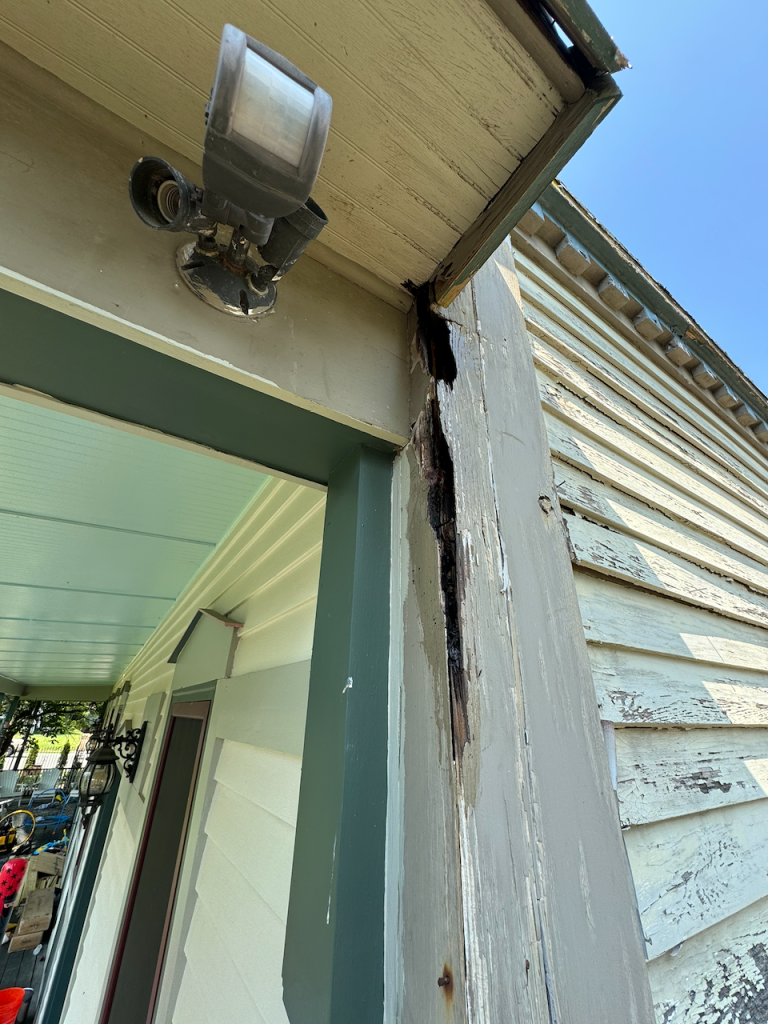
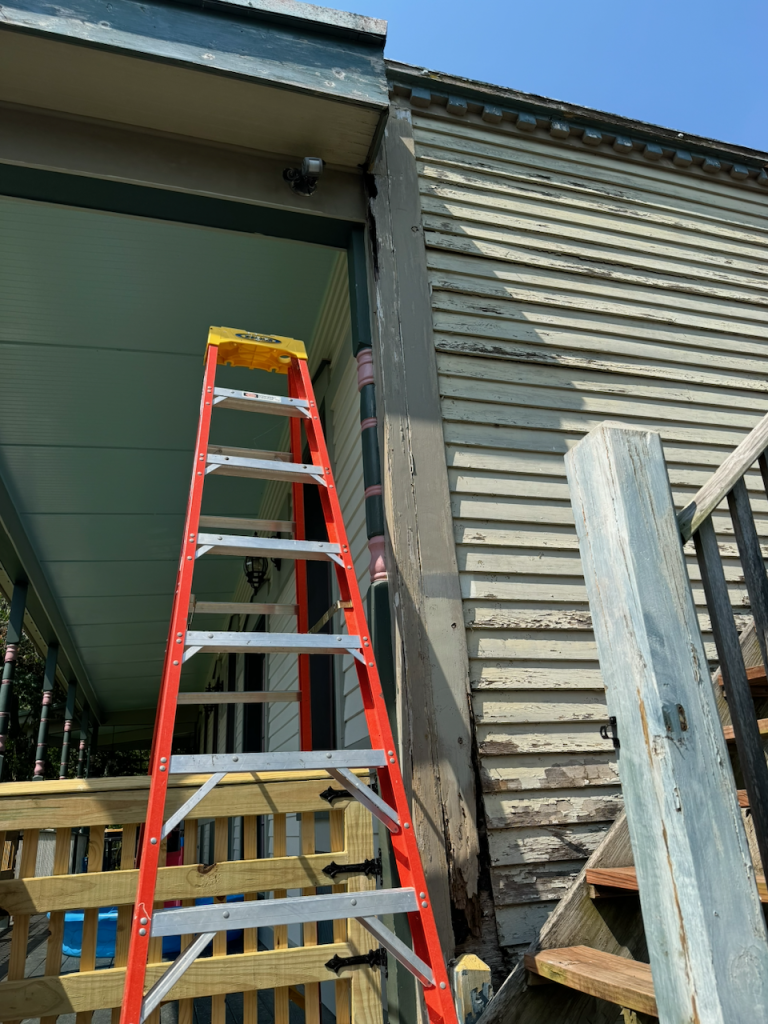
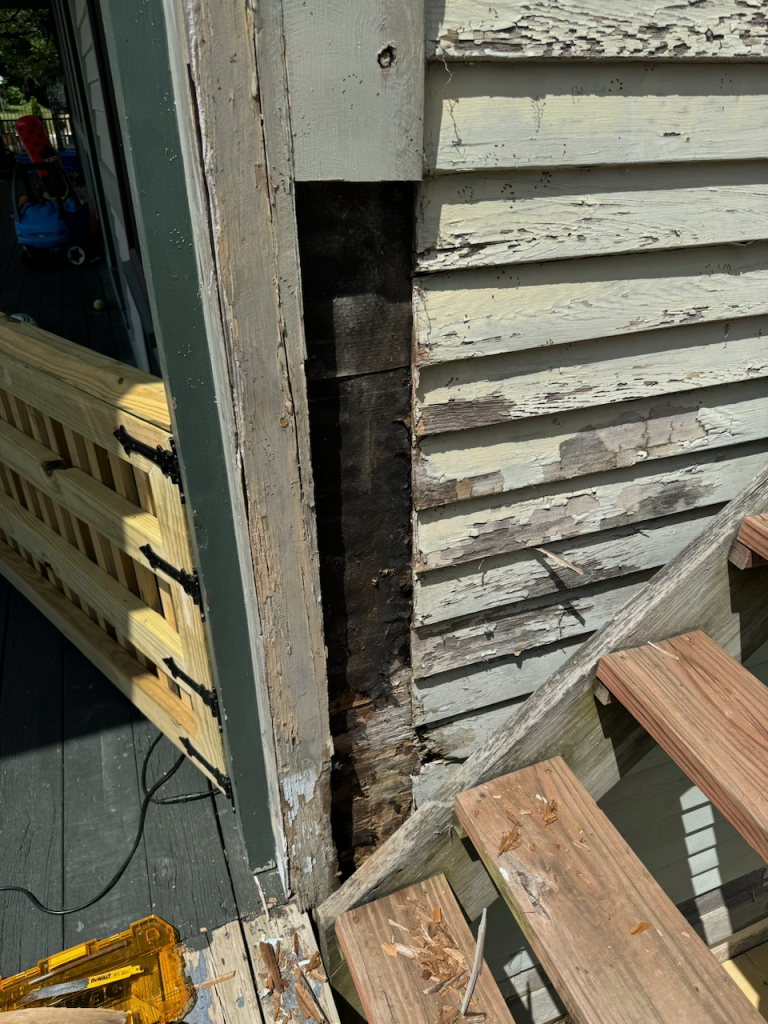
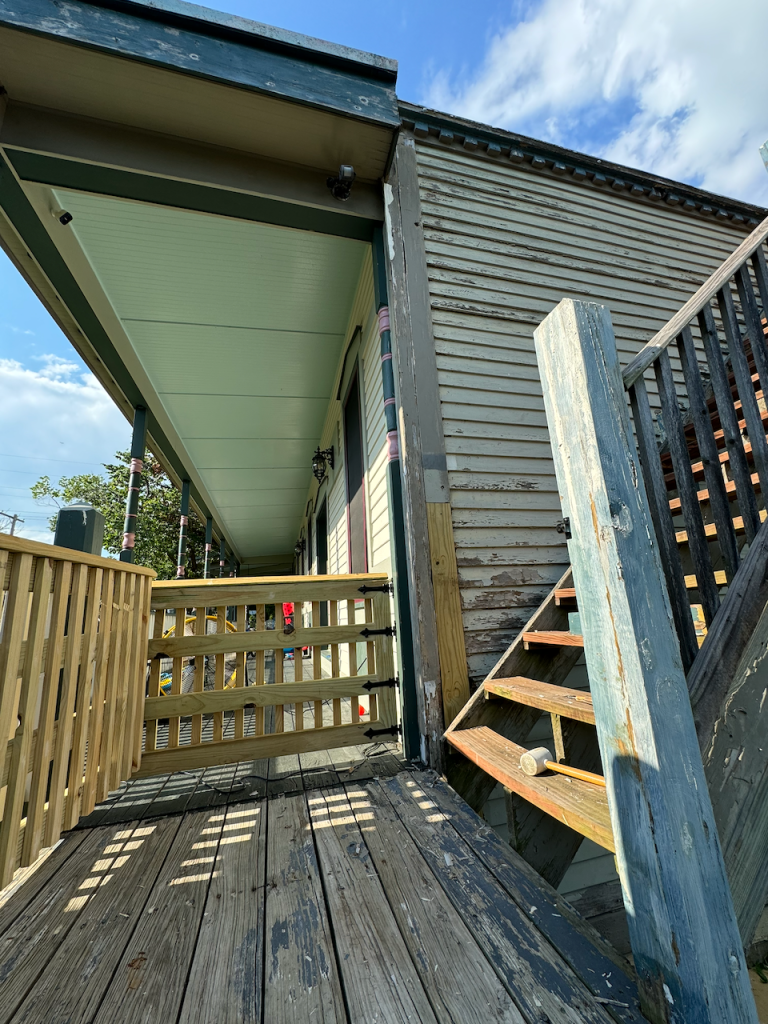
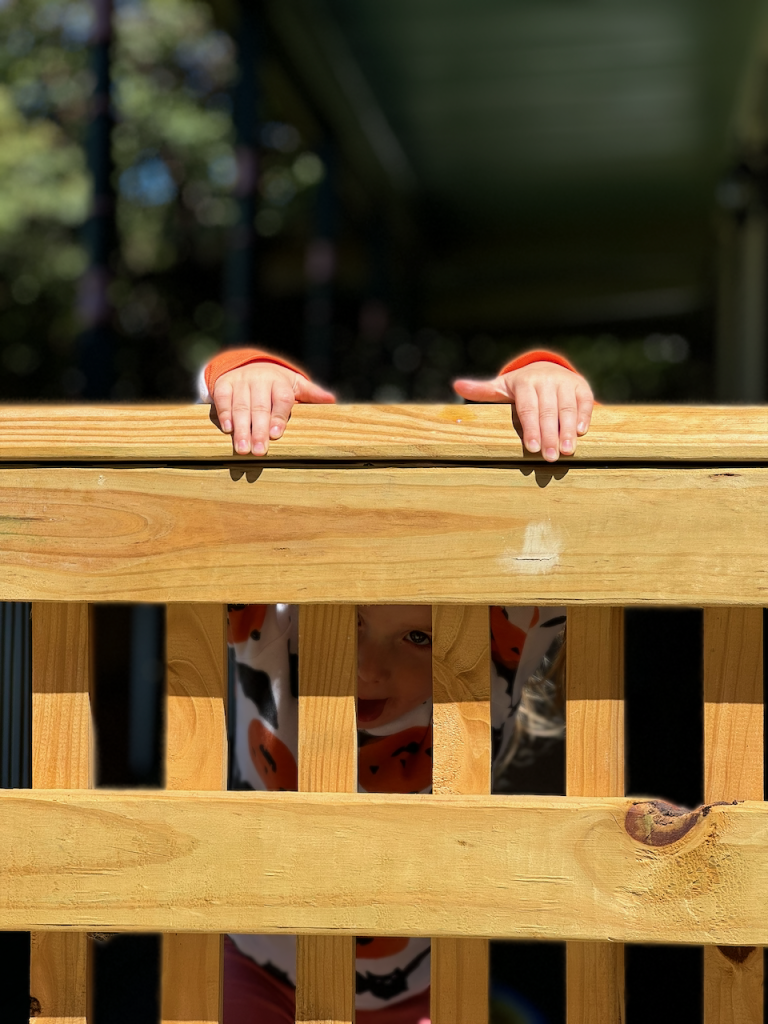
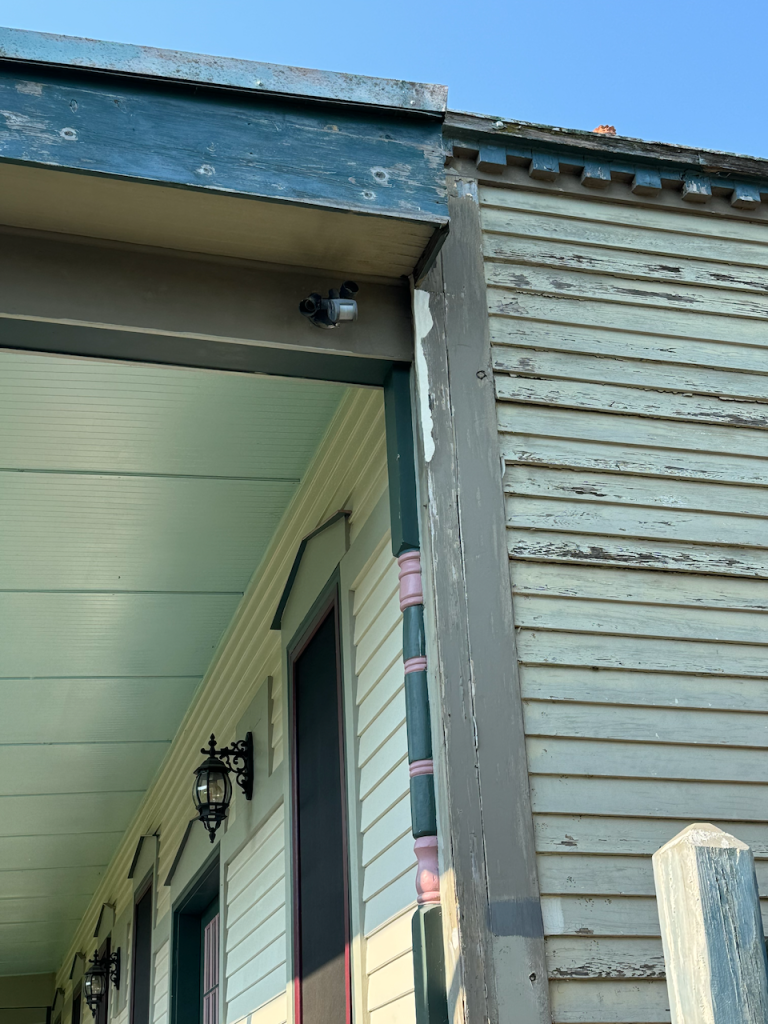
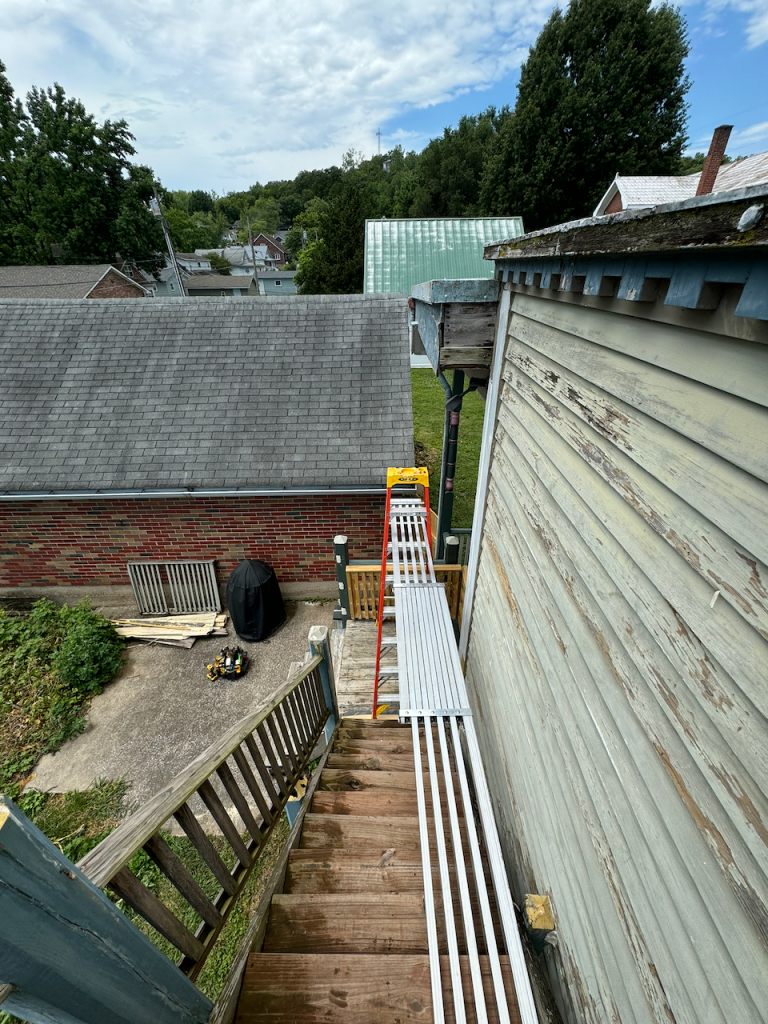
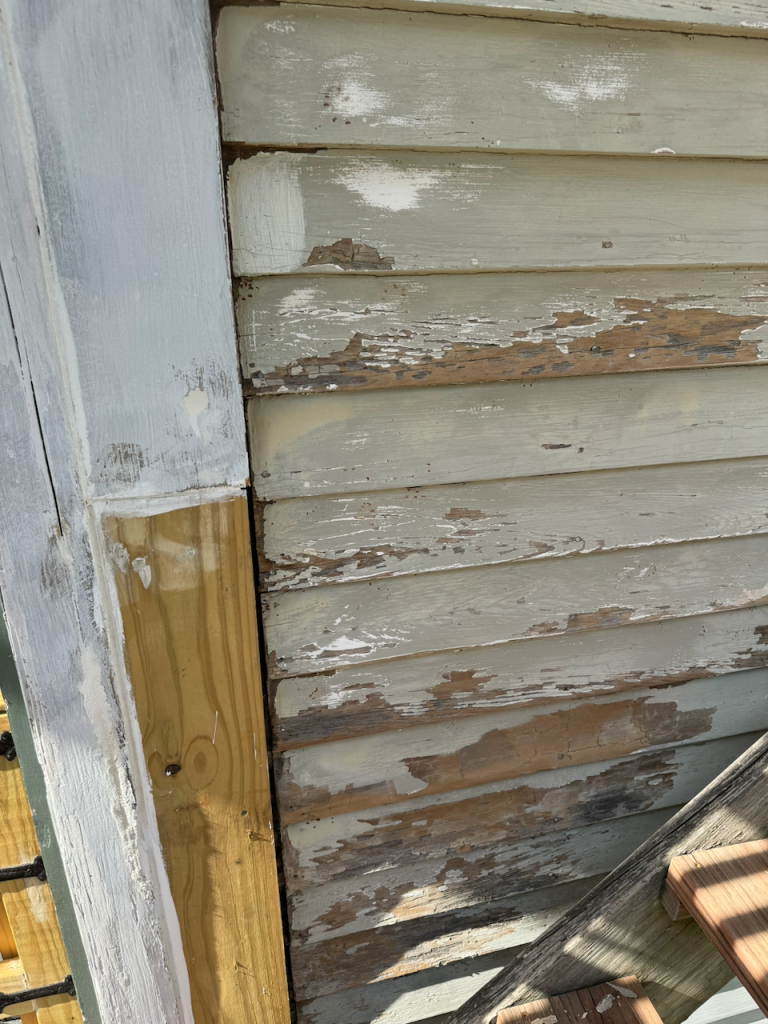
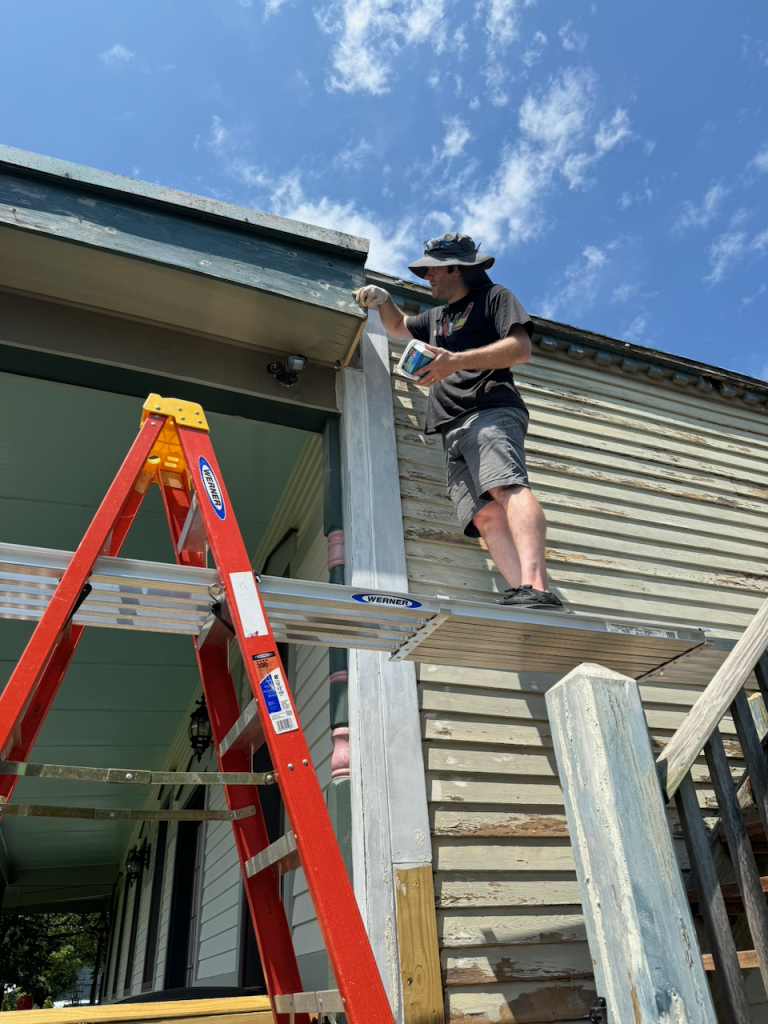
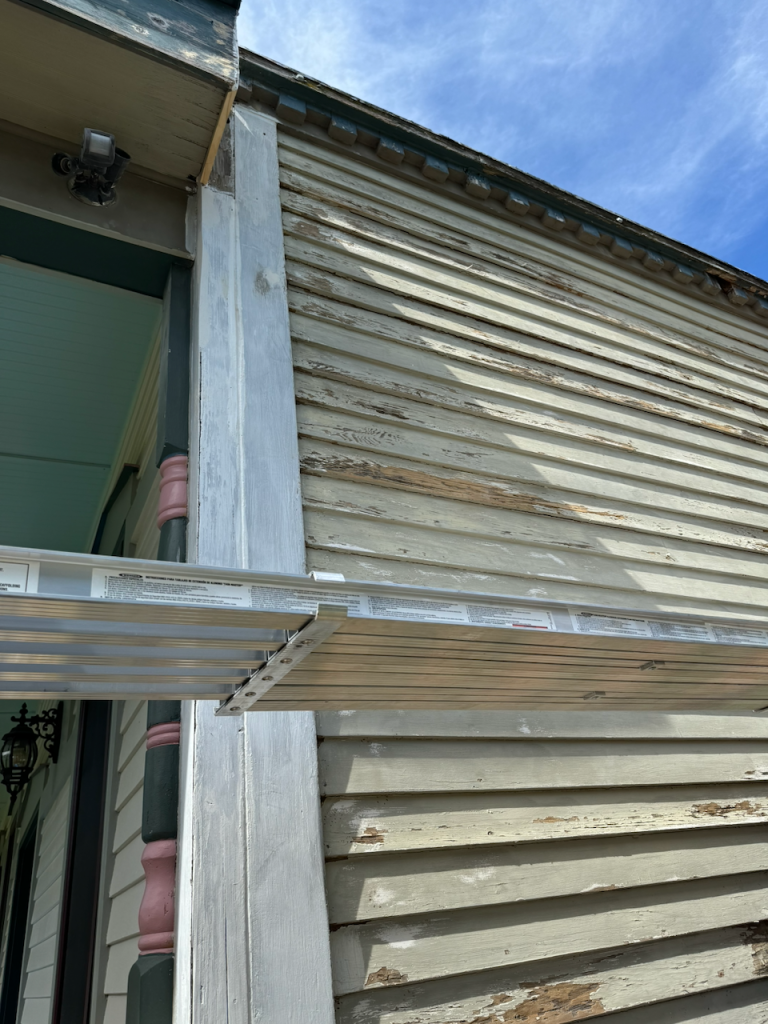
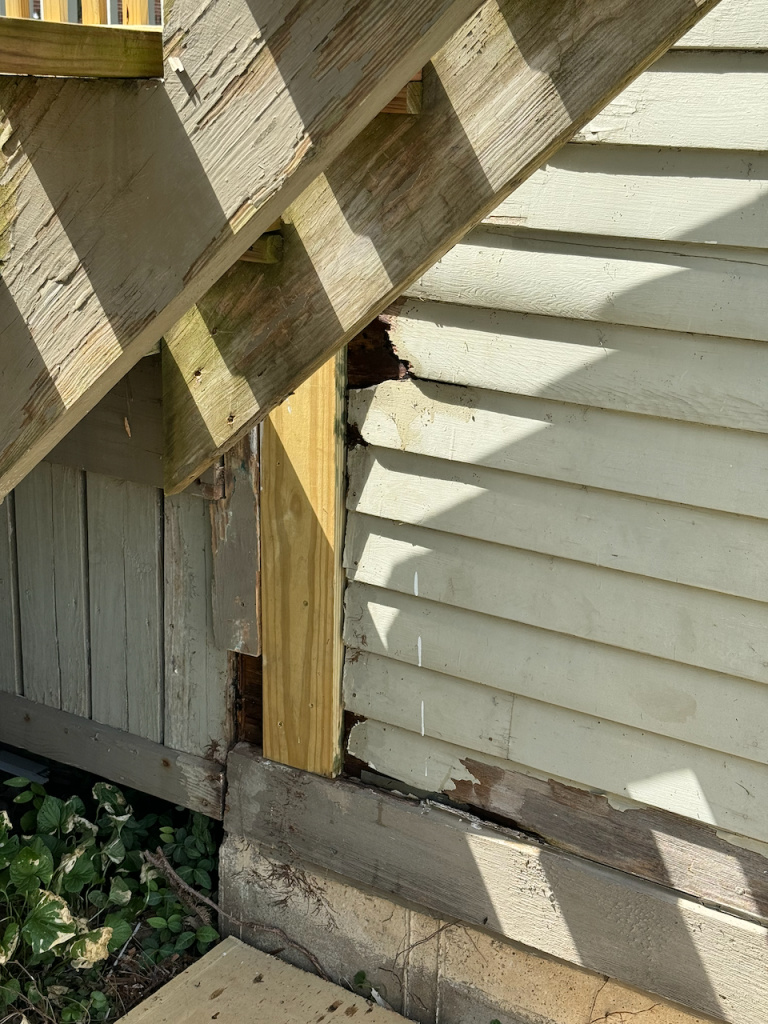
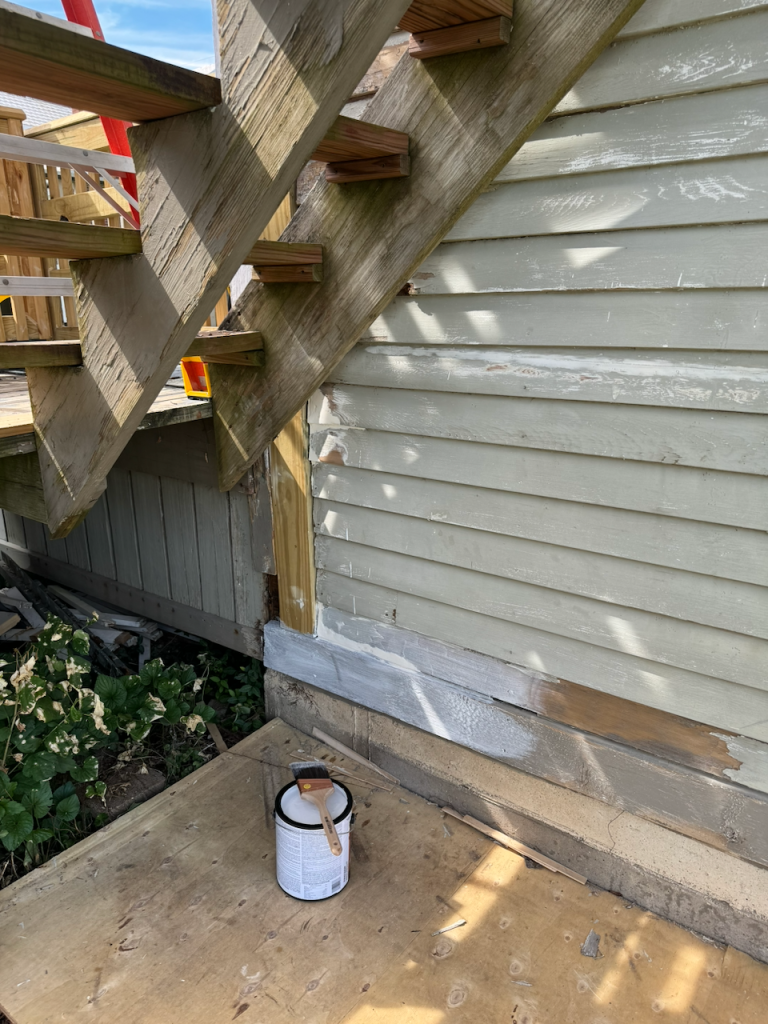
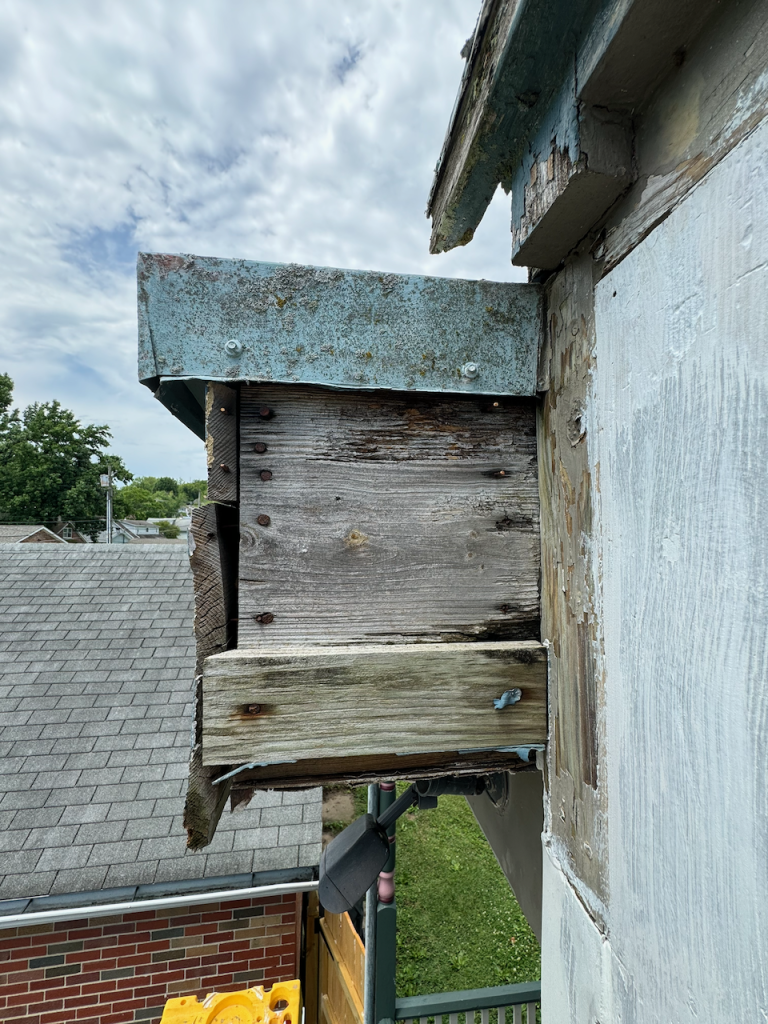
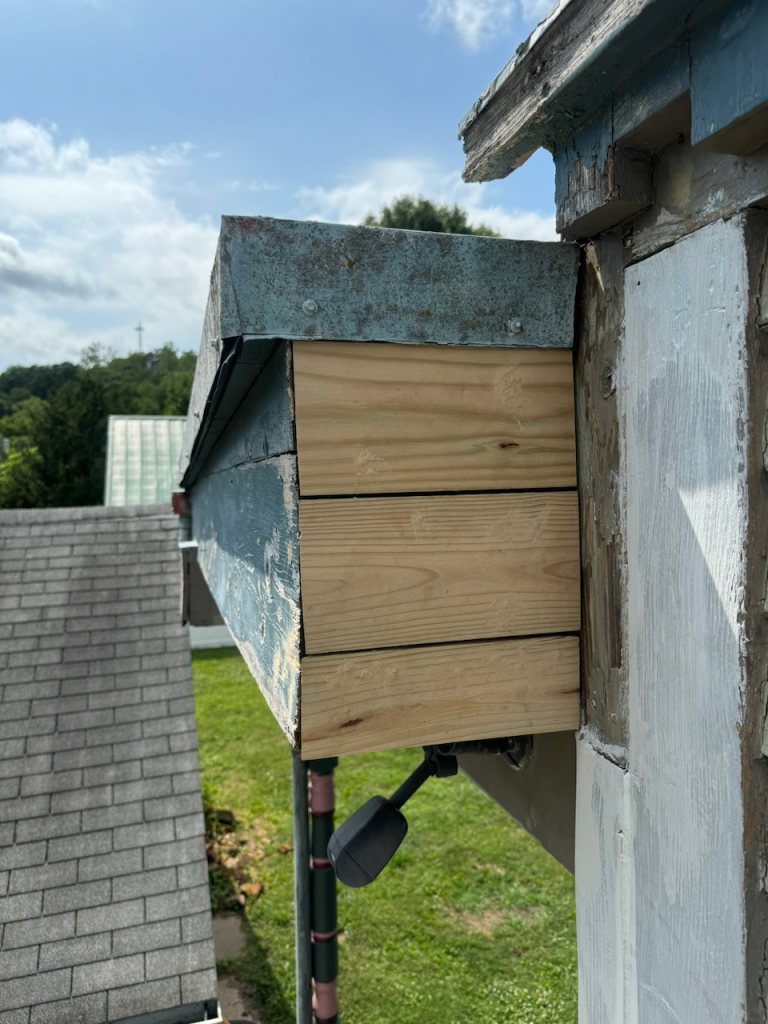
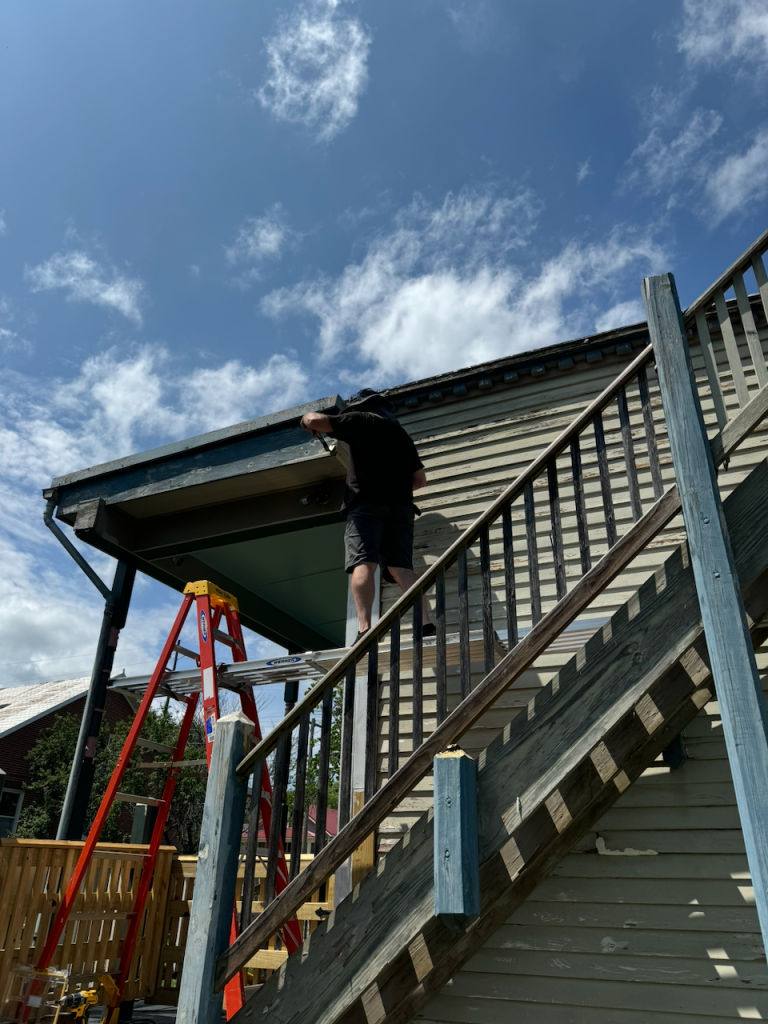
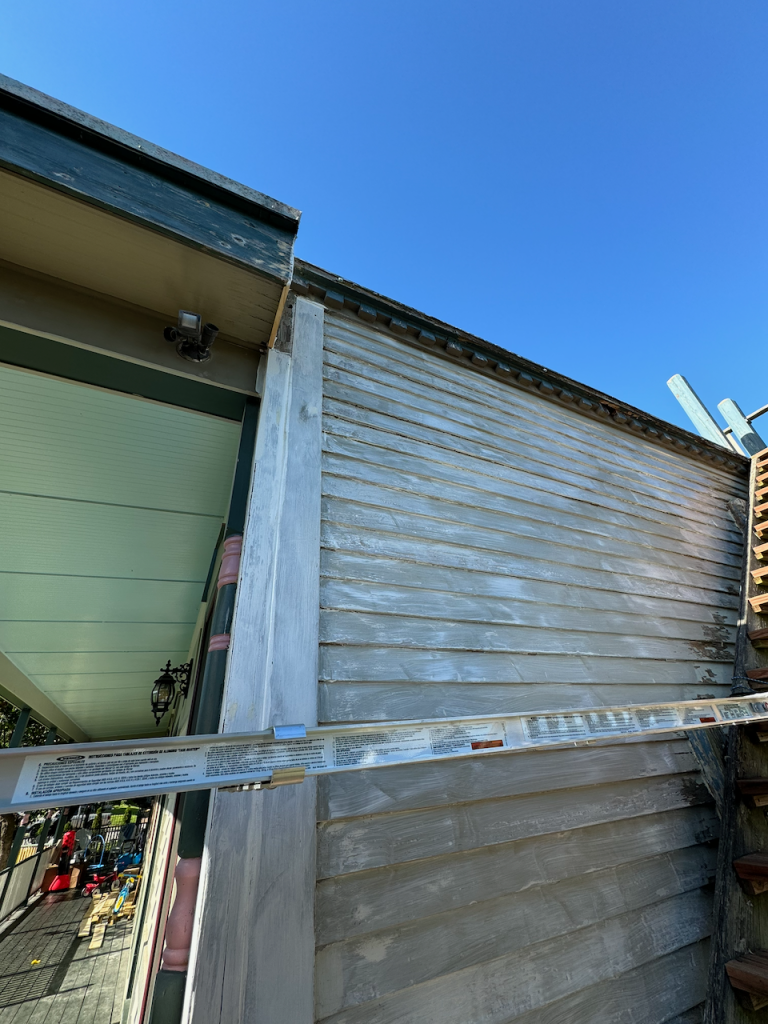
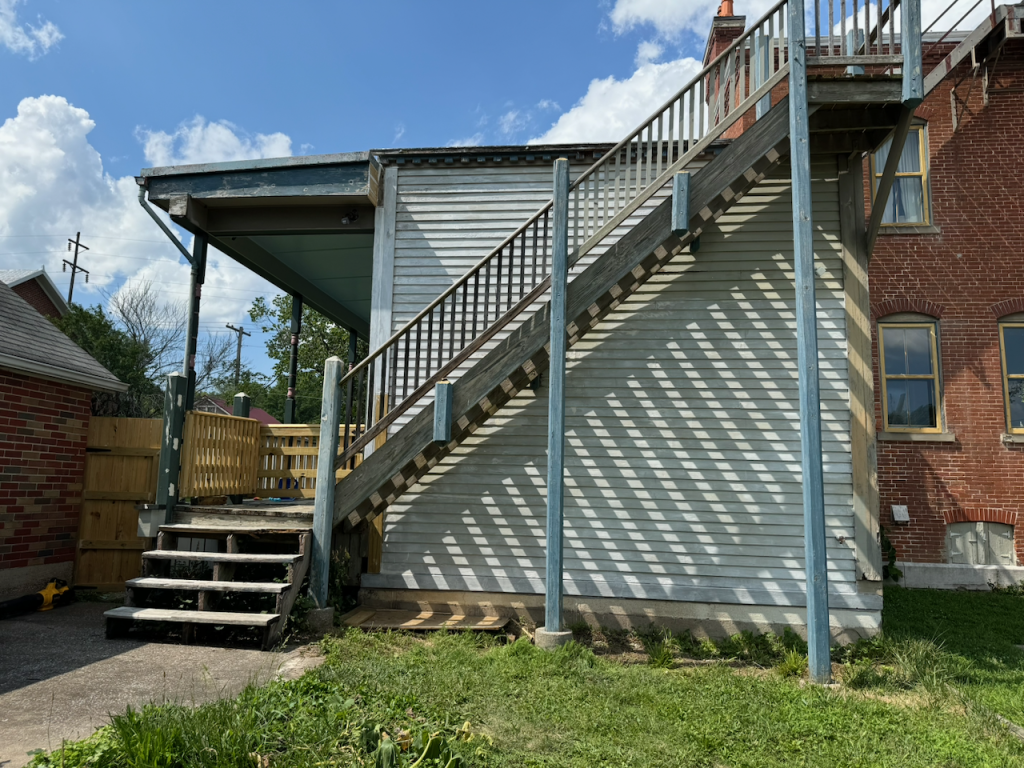
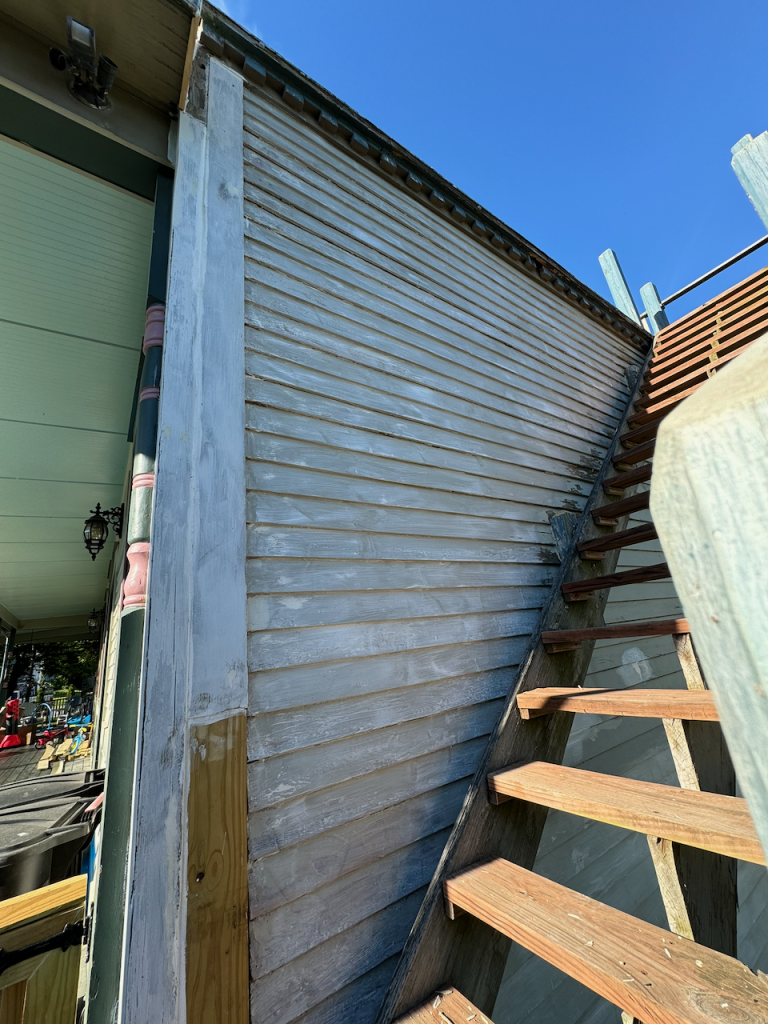
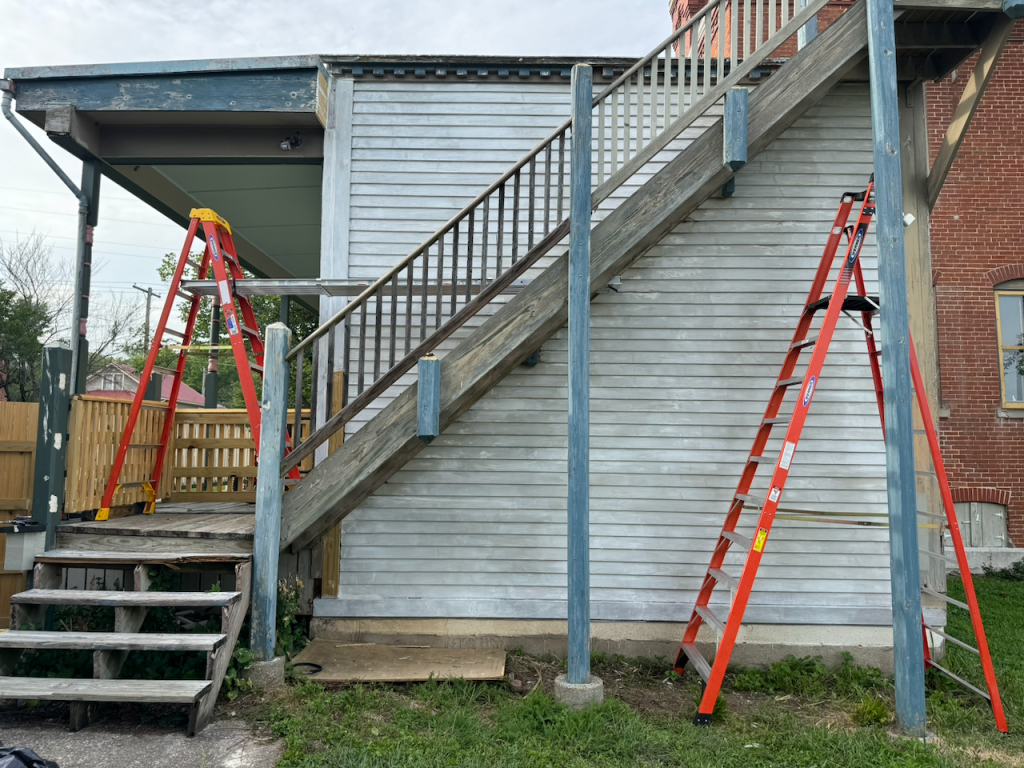
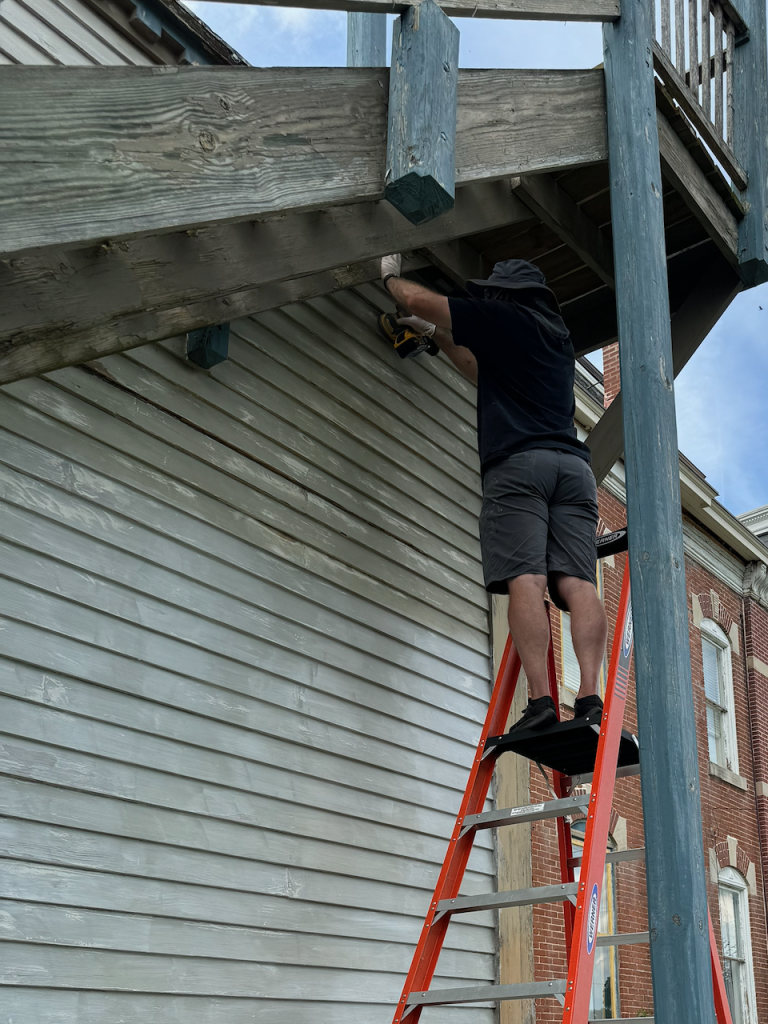
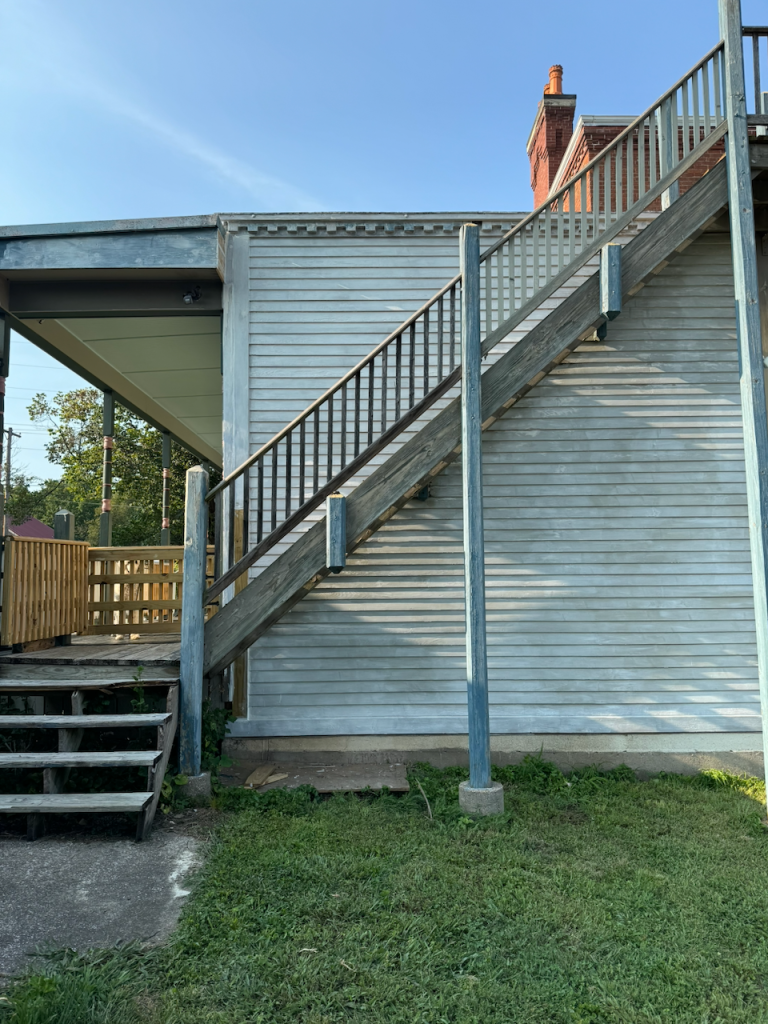
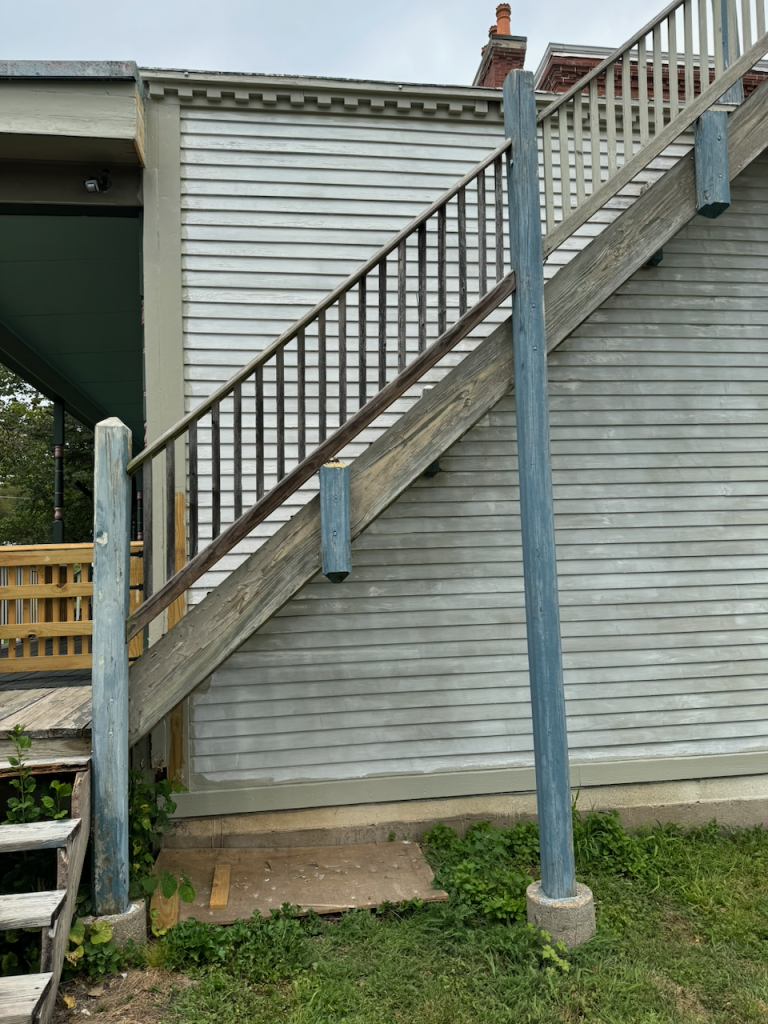
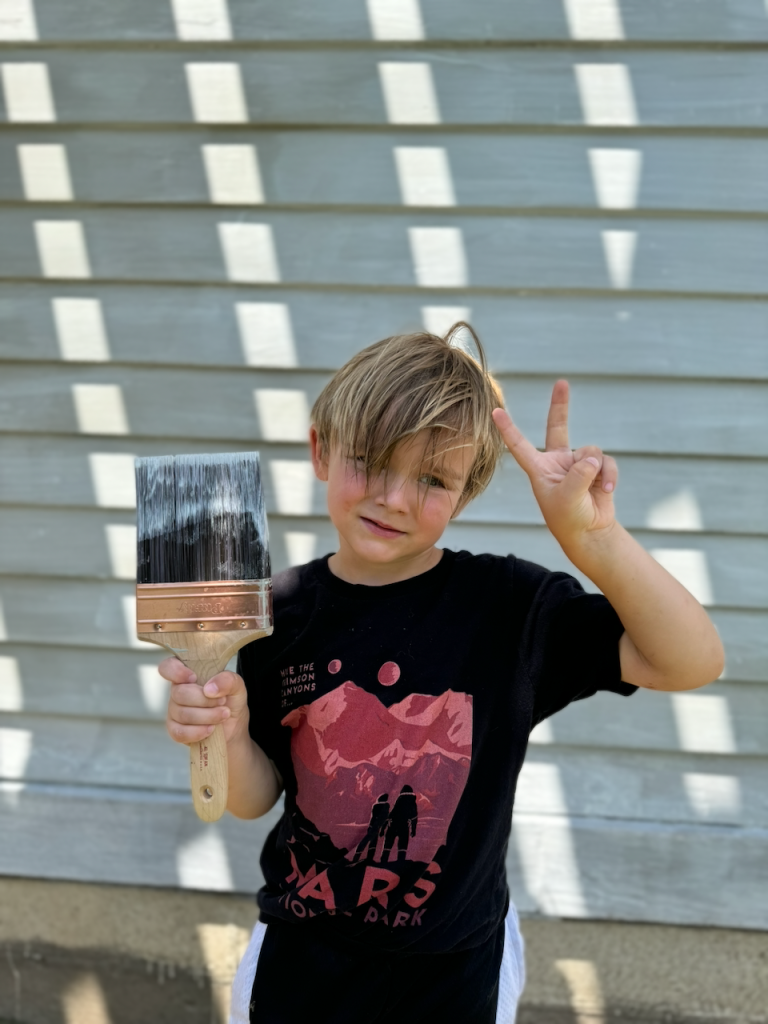
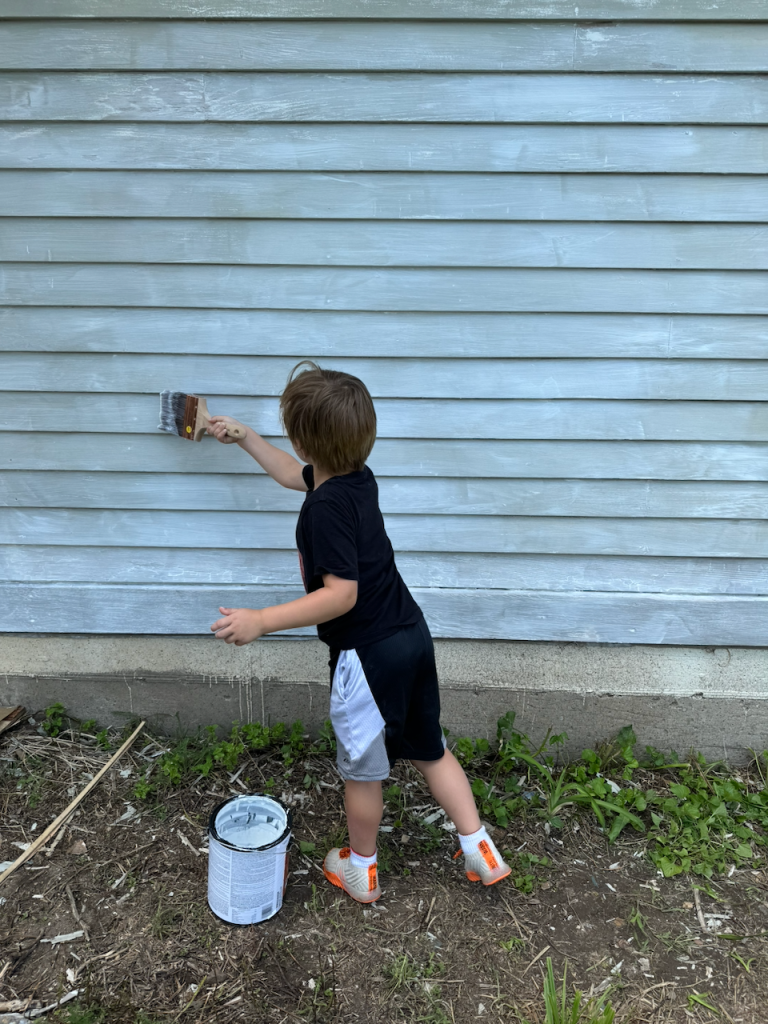
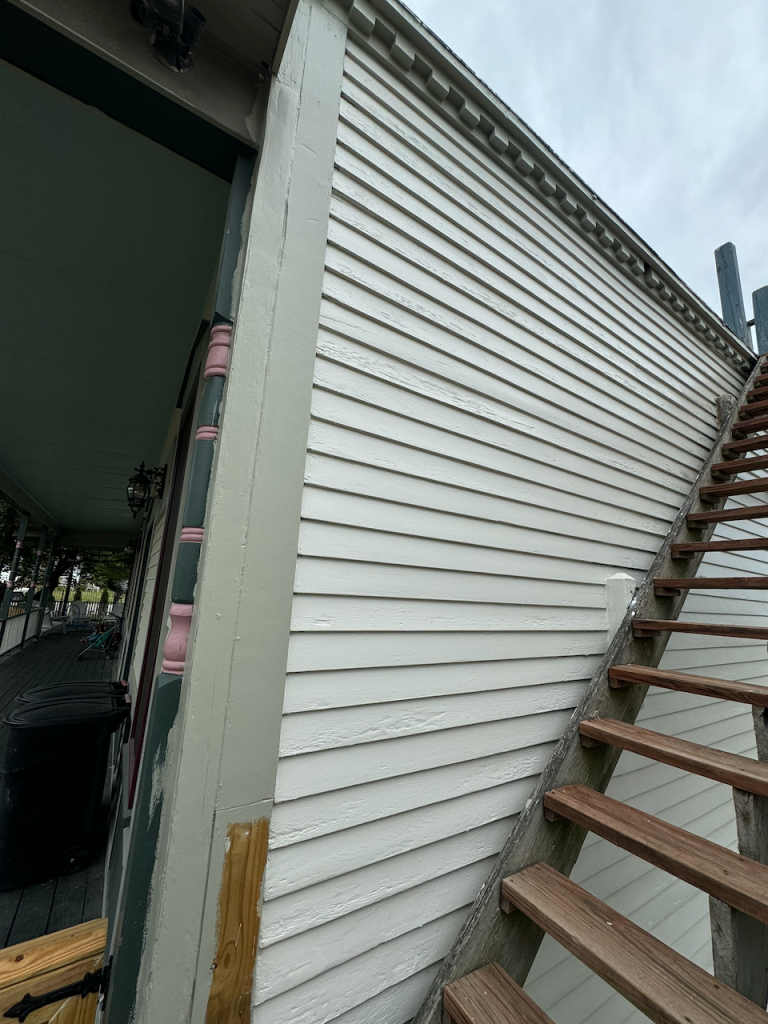
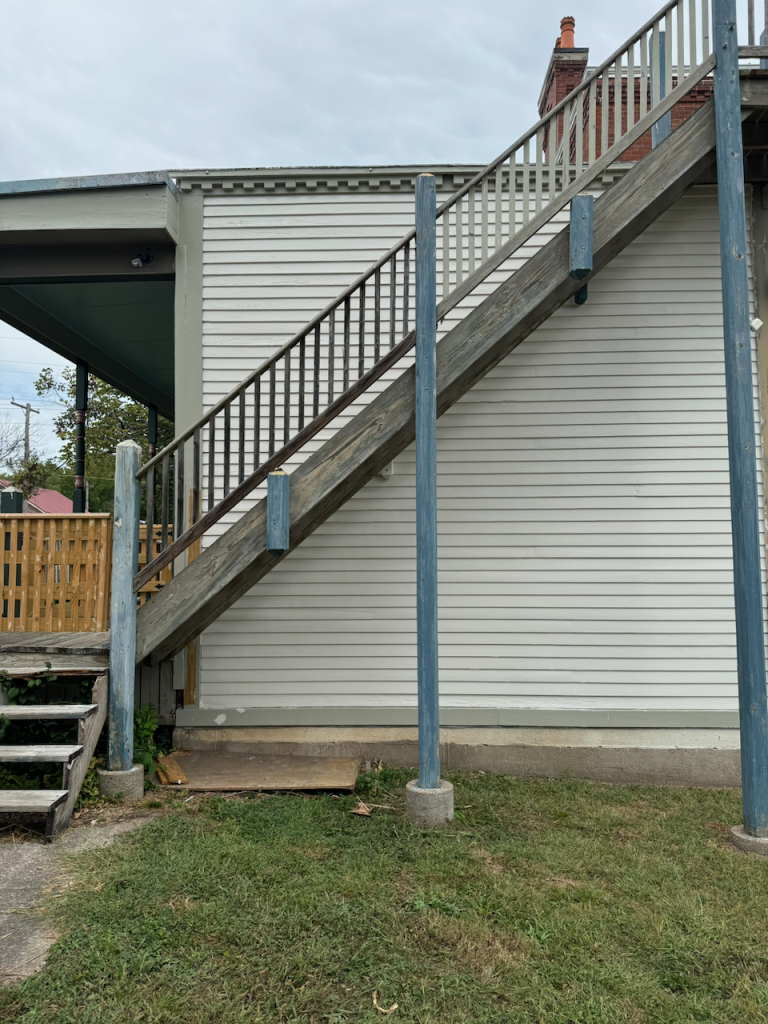
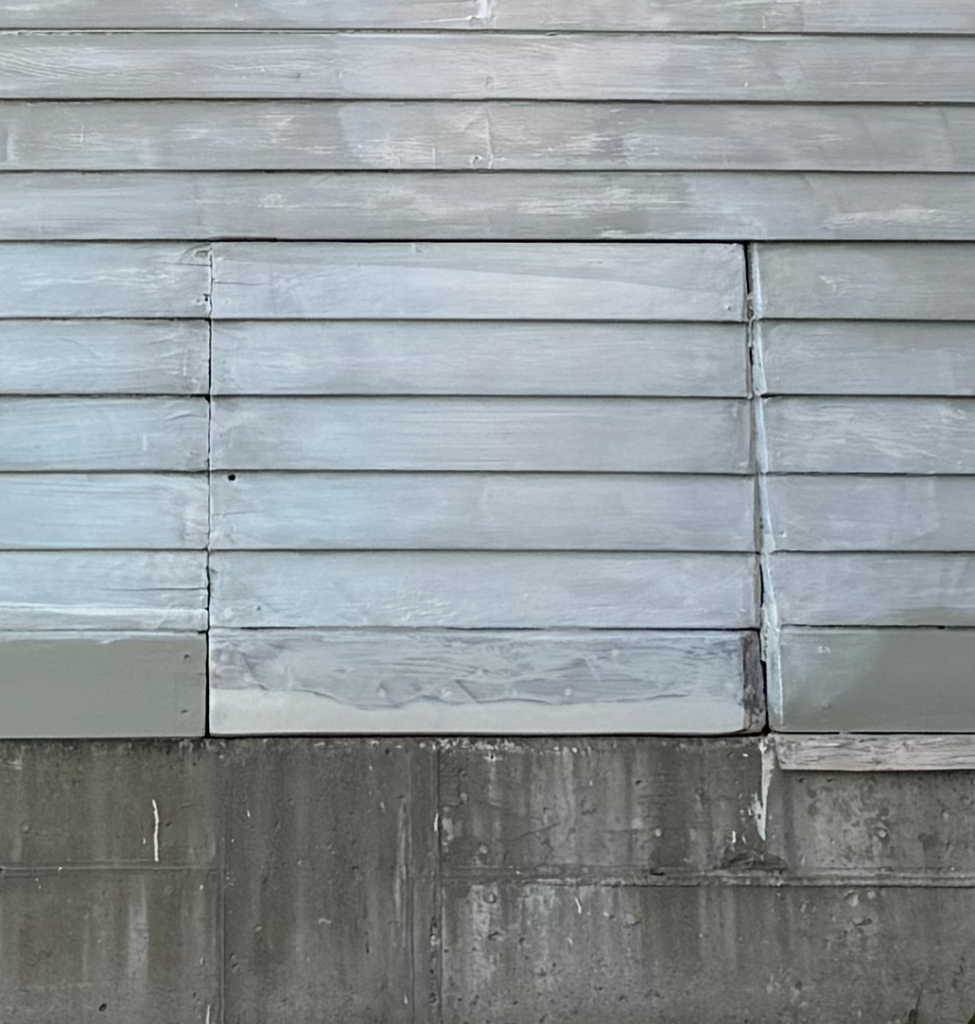
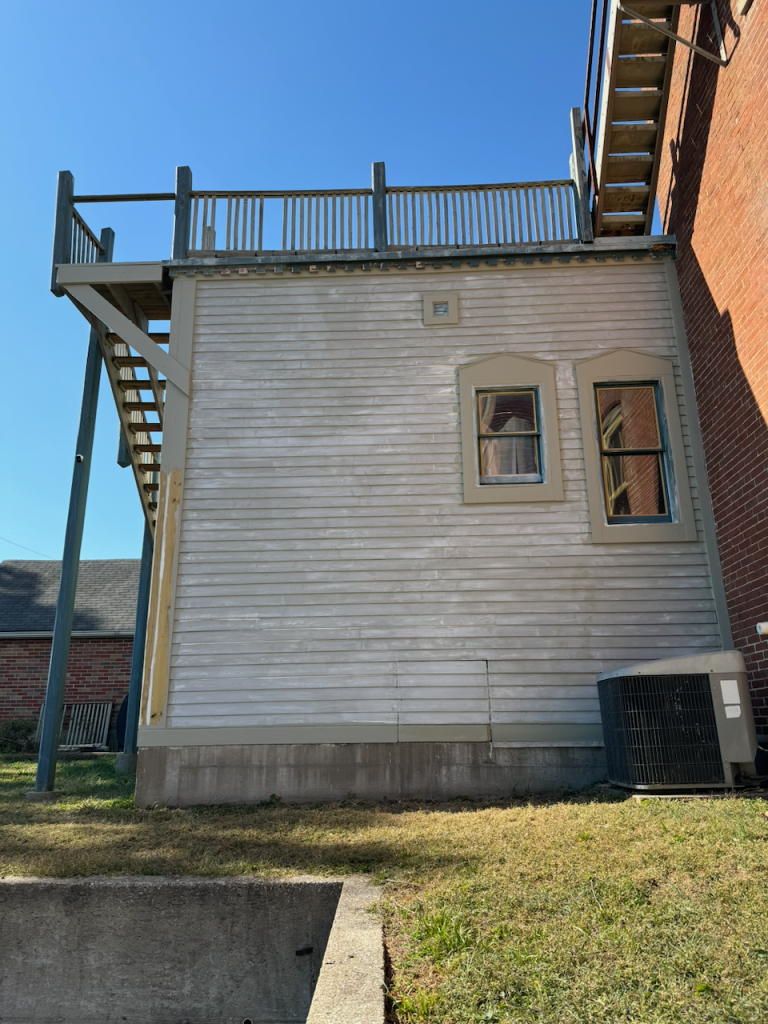
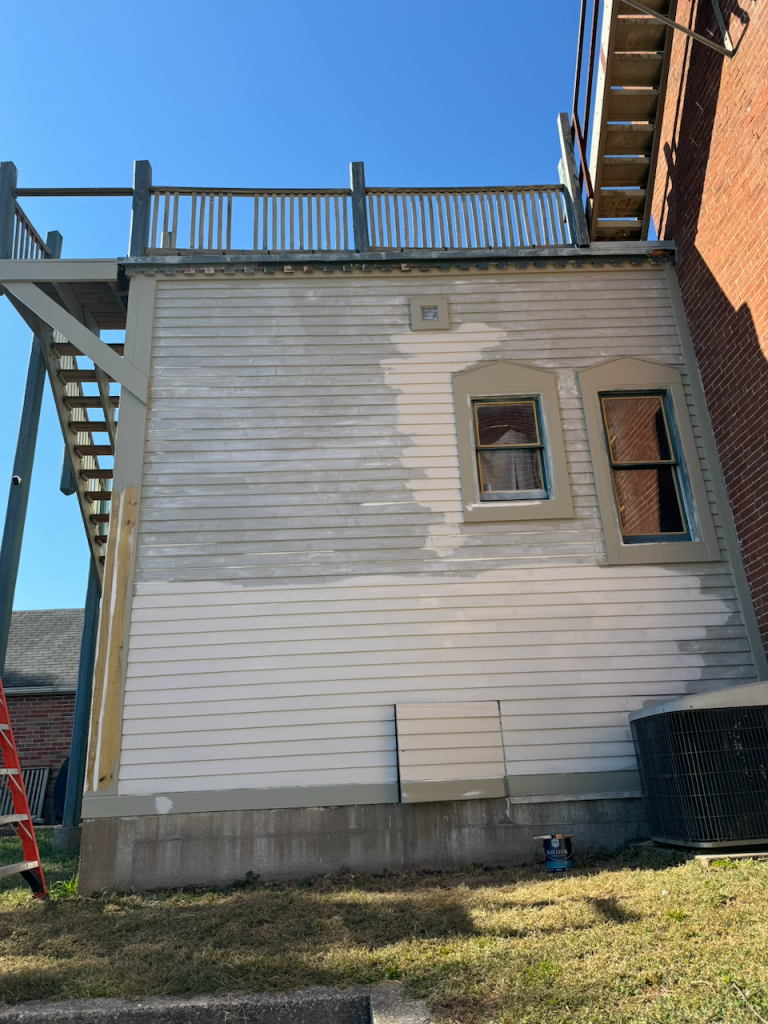
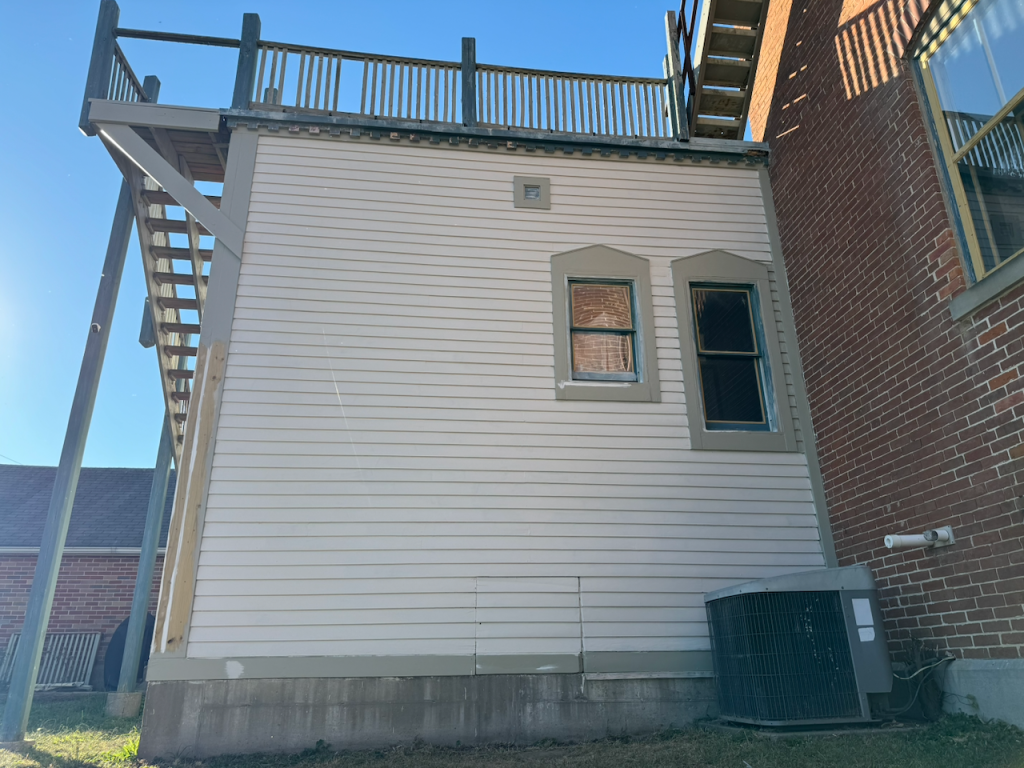
I don’t think this side of the house had been painted in 20 years. The siding soaked up paint like a sponge. For now, the priority is getting this side of the house watertight. We’ll tackle the staircase as a separate project.
With the south-side wood rot repaired and the siding painted, we turned our attention to the southeast side.
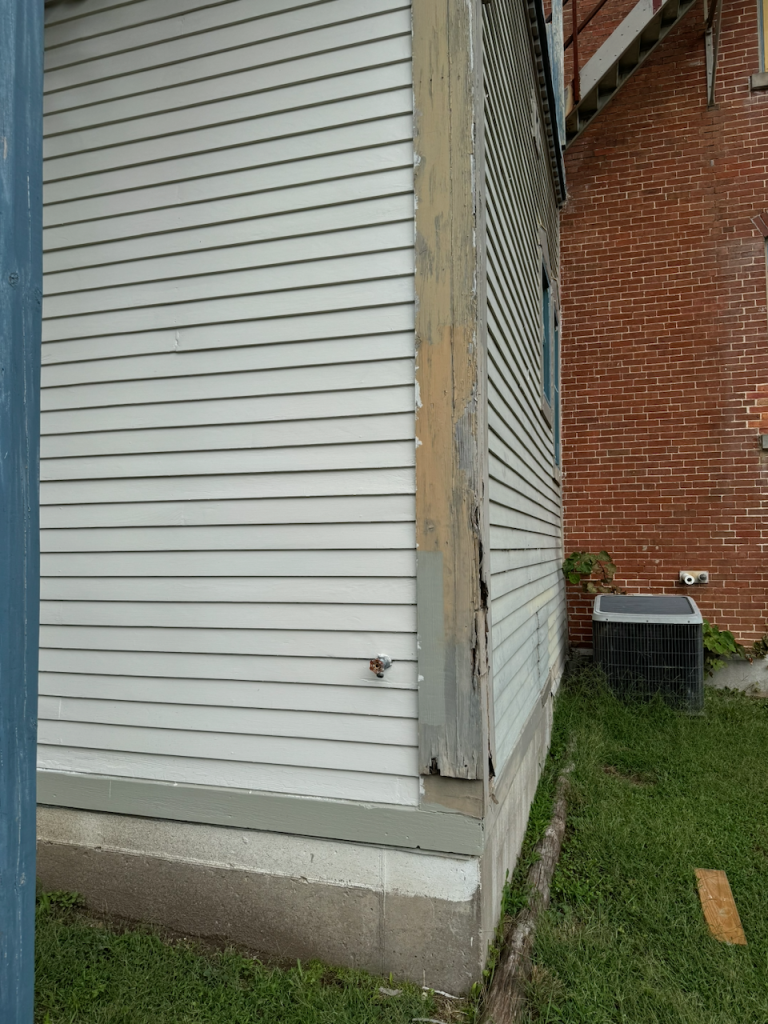
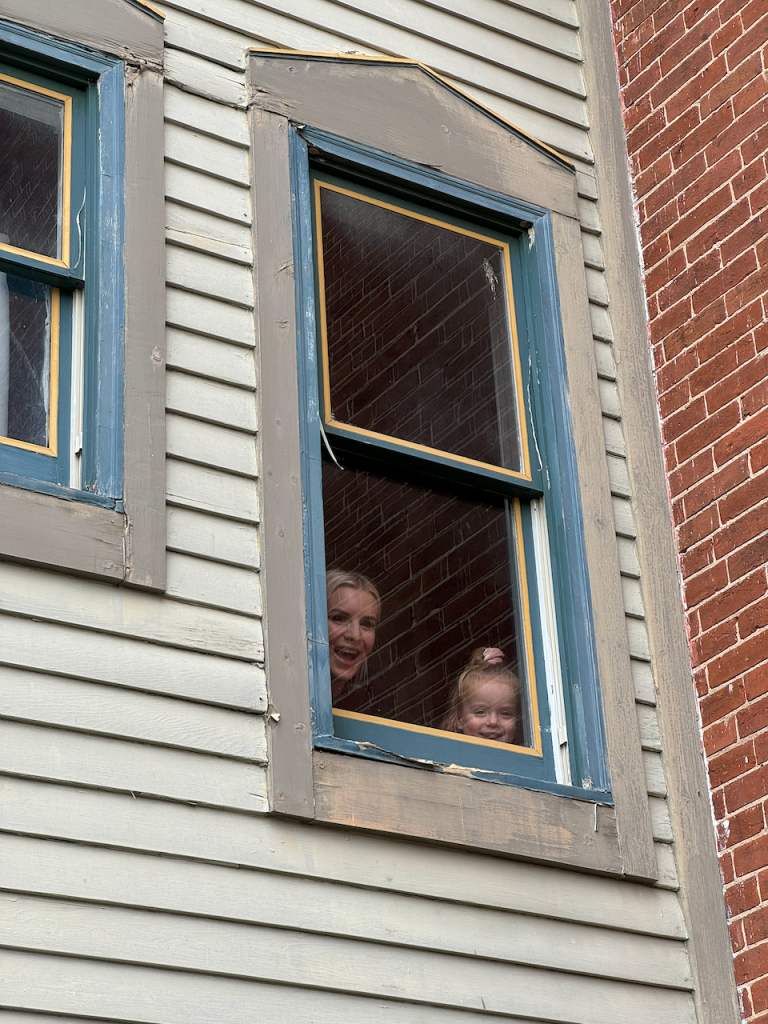
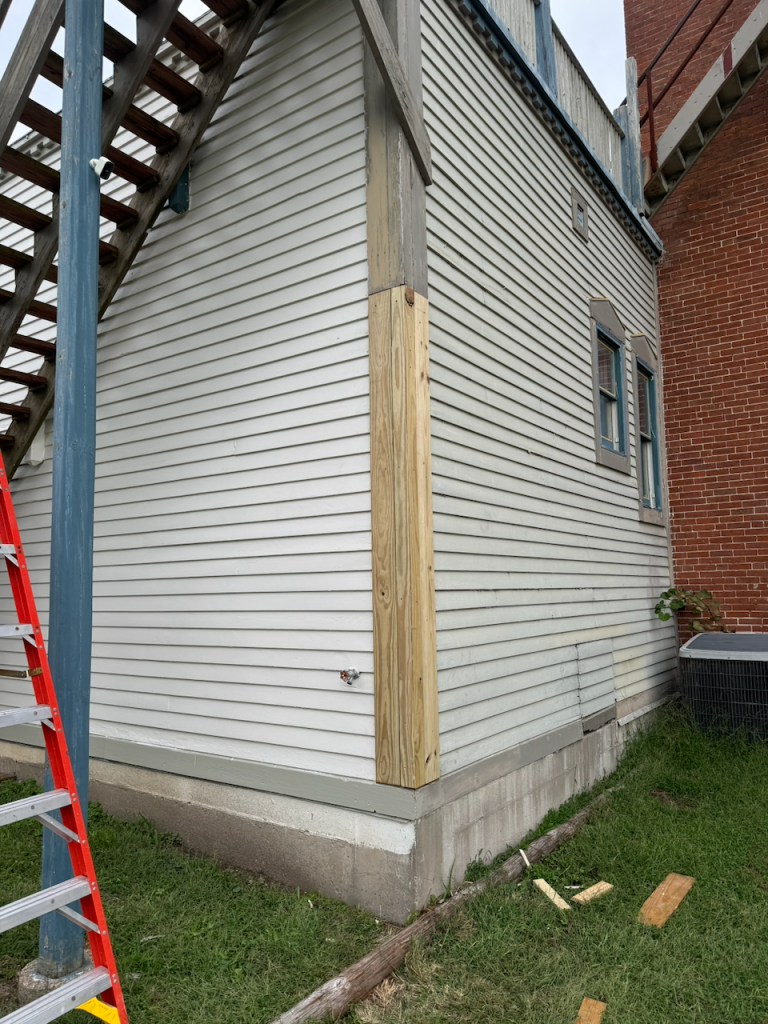
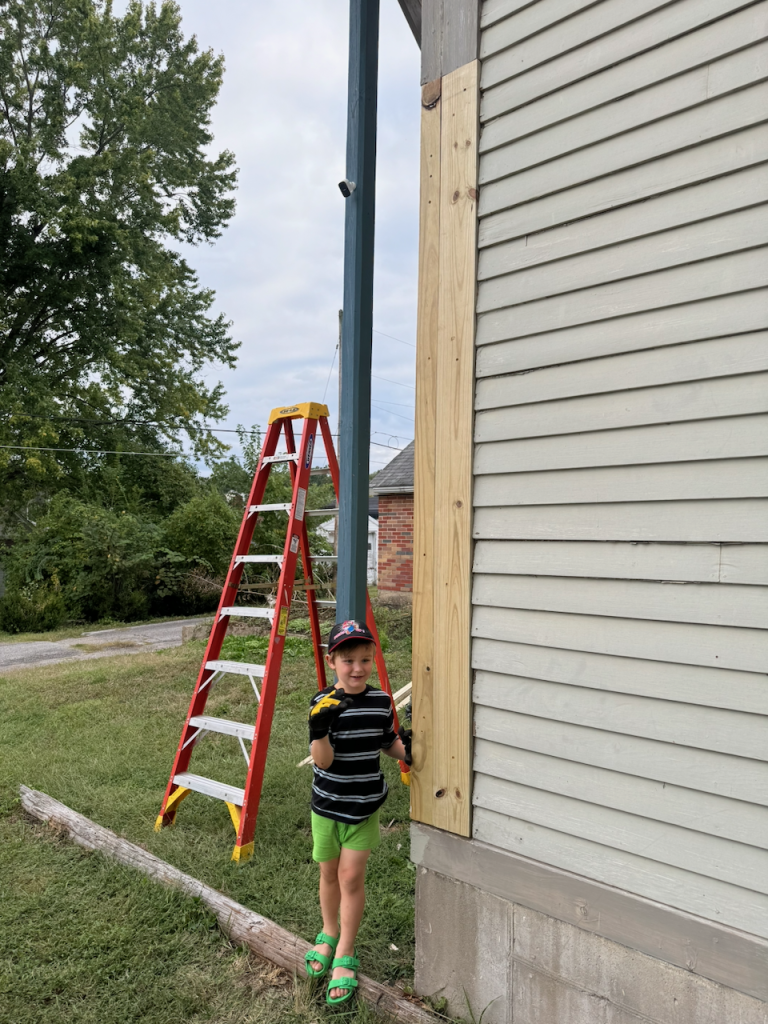
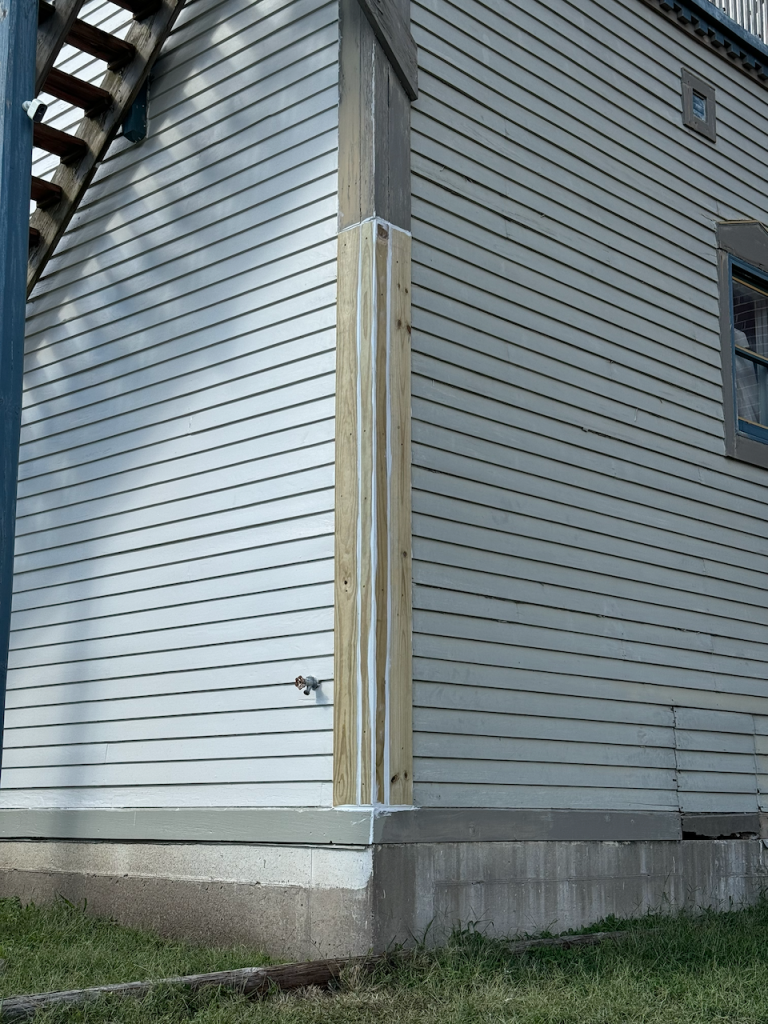
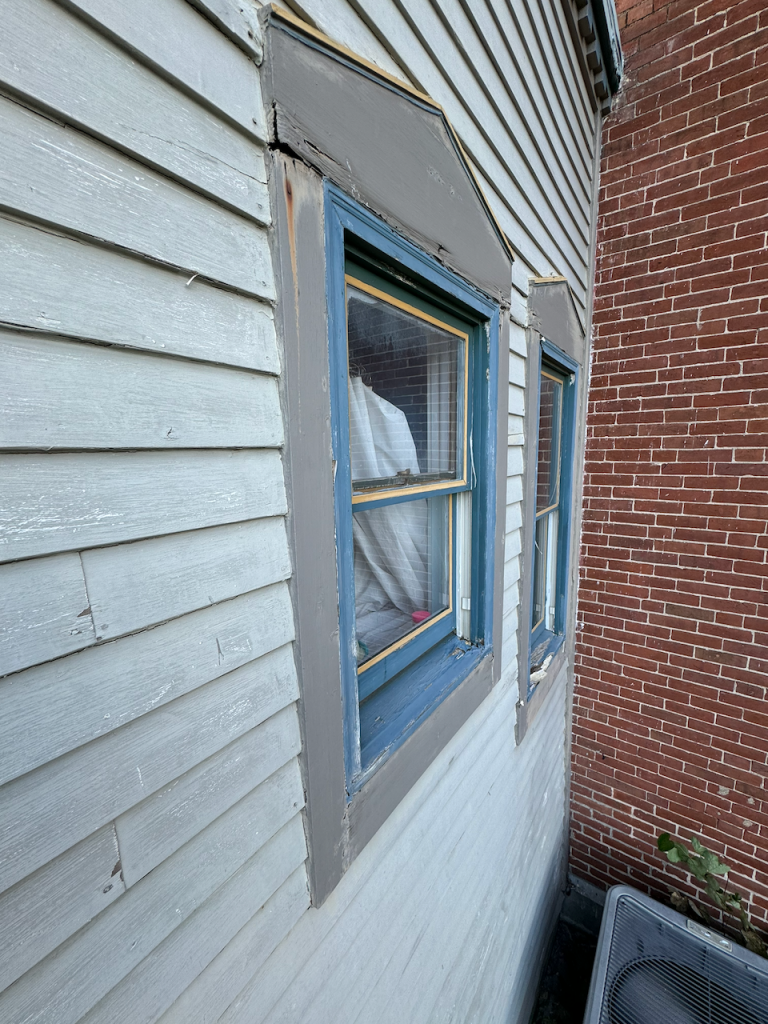
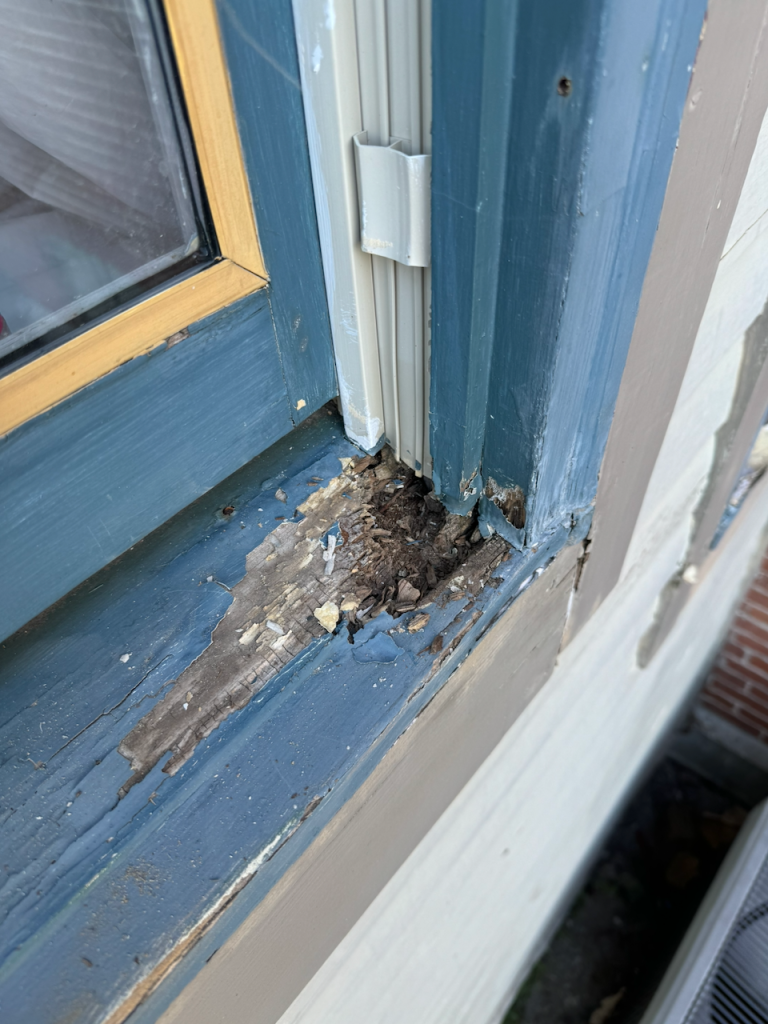
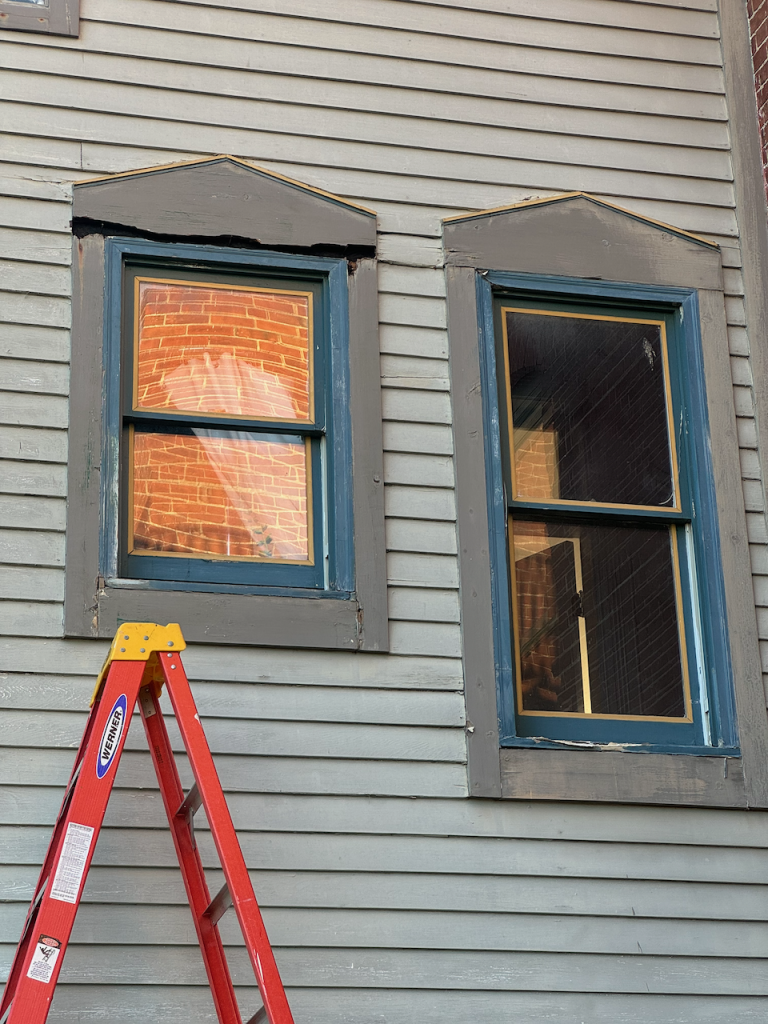
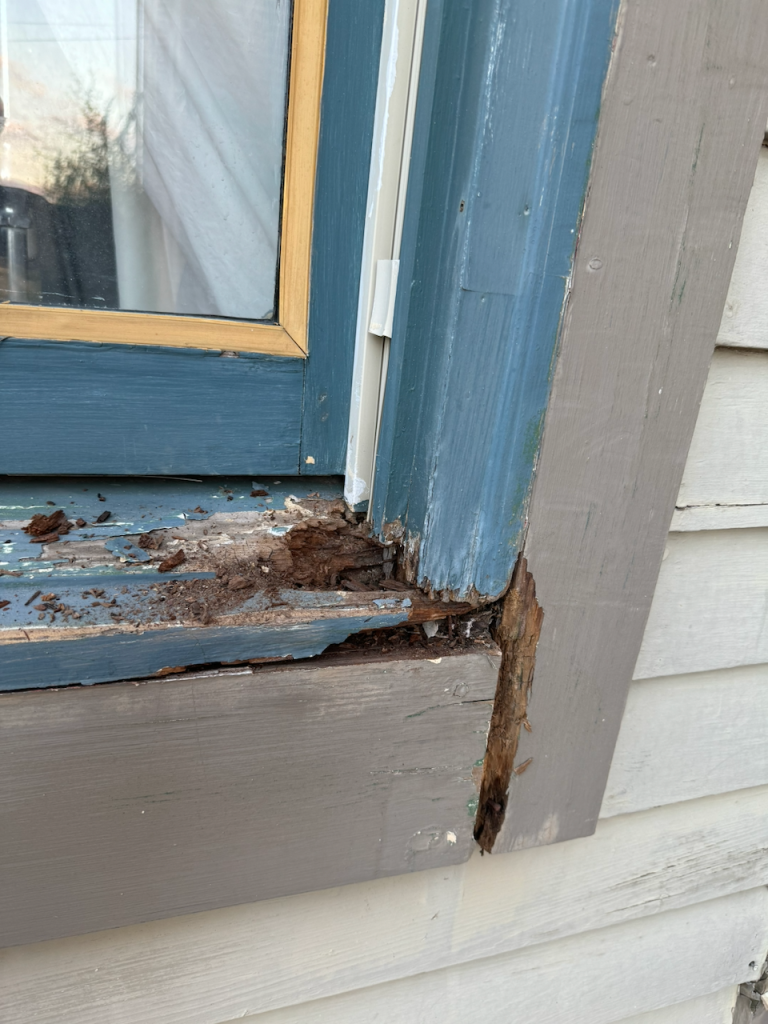
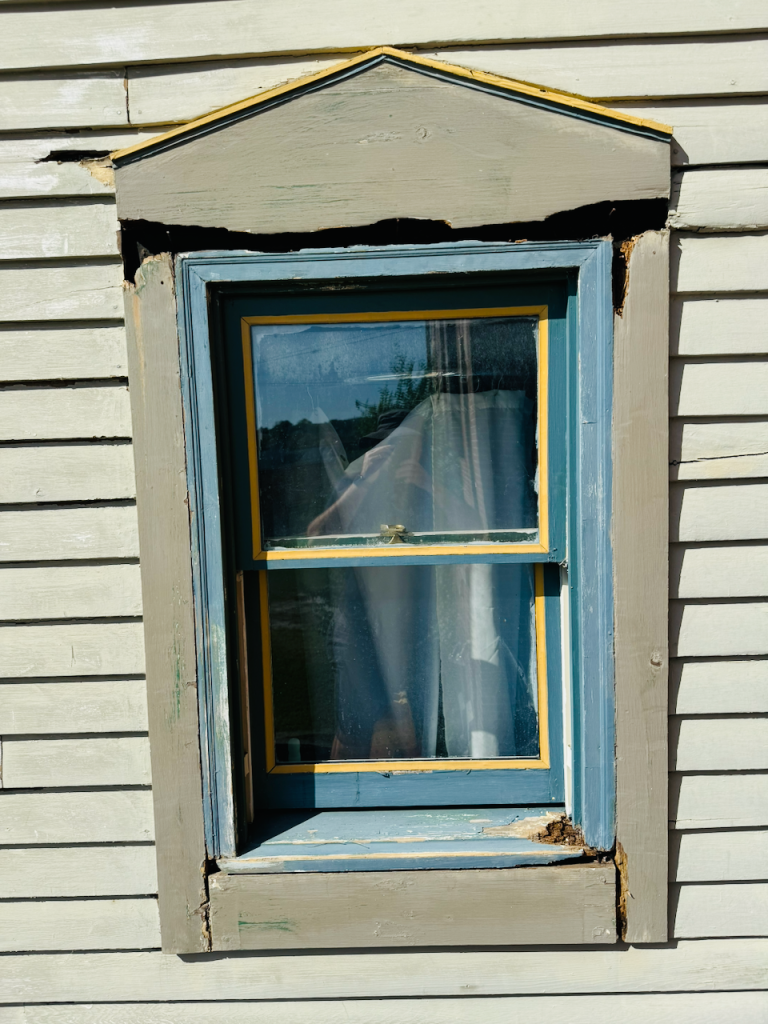
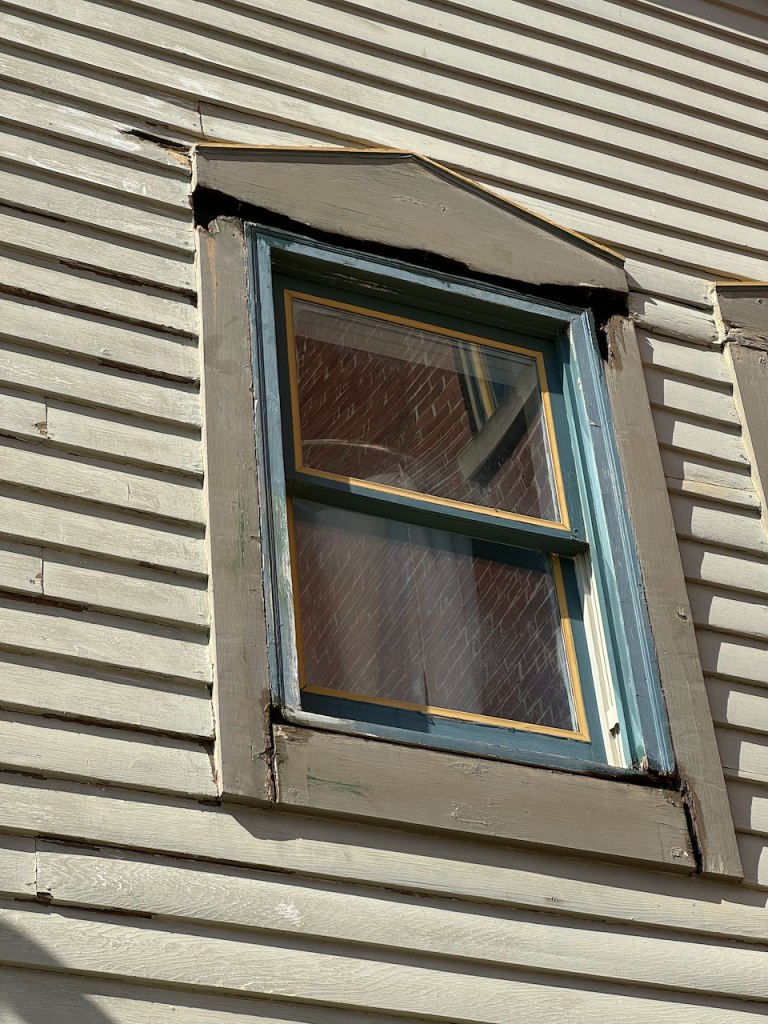
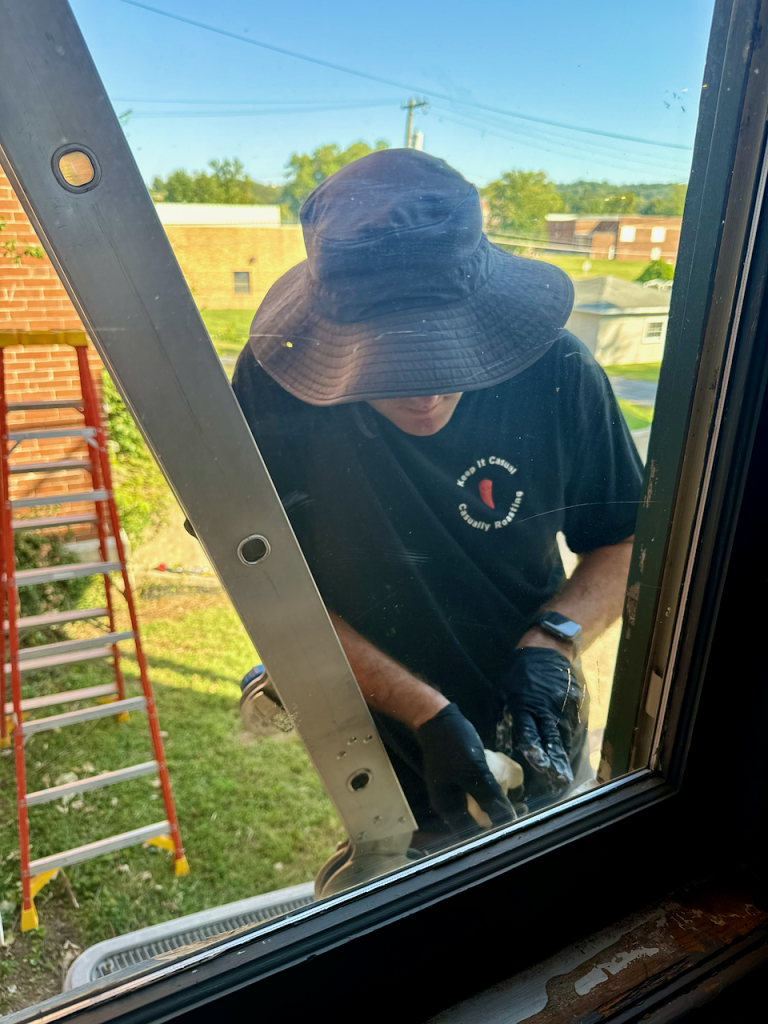
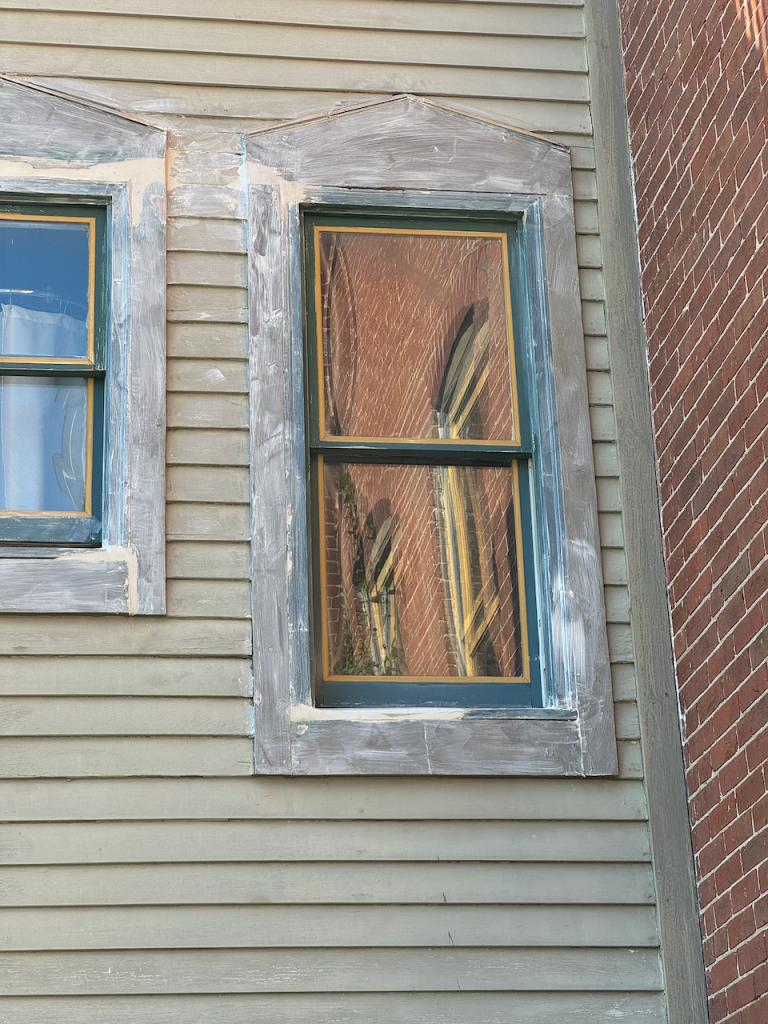
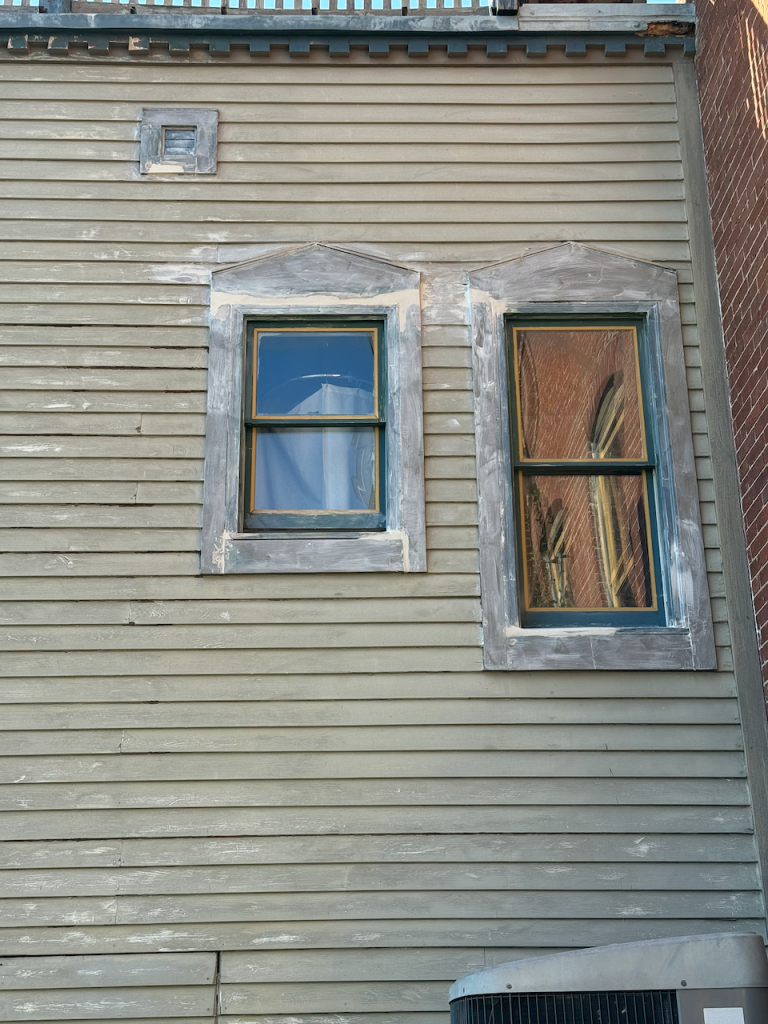
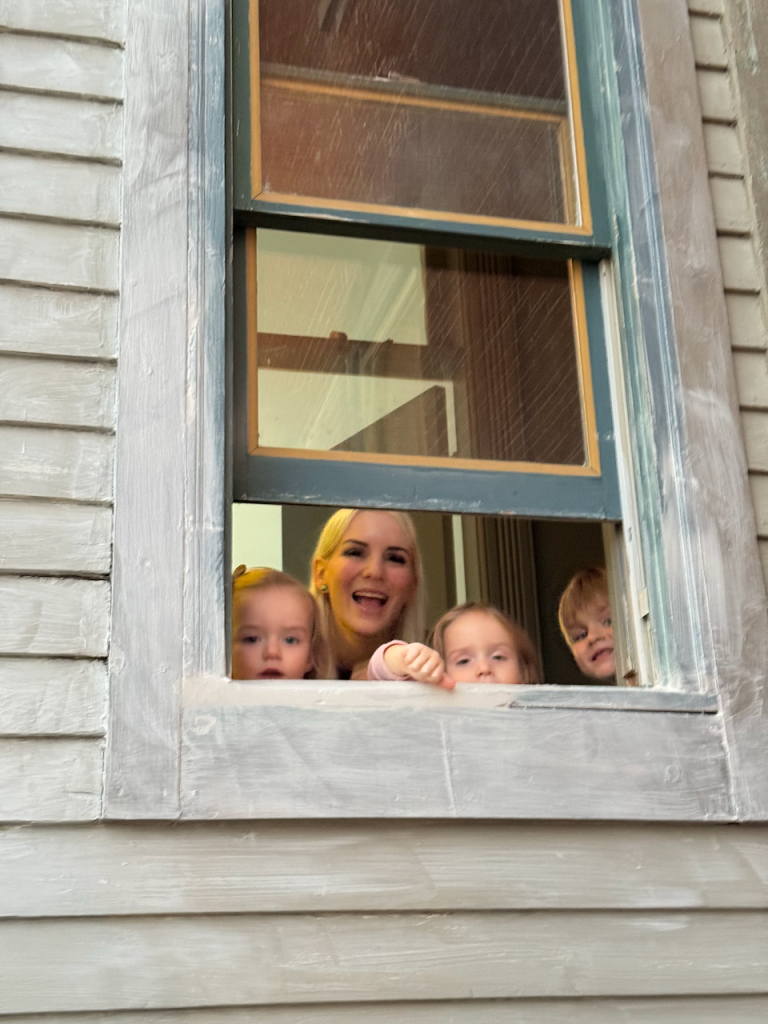
We’re making our way around to the southeast side. Next up are the windows, and there’s plenty of wood rot to address.
These windows and the exhaust vent are good examples of where the Abatron system shines. Instead of replacing the damaged wood entirely, we can stabilize what remains and rebuild the missing sections.
I came across Abatron while researching wood-repair methods used in historic preservation. National Park Service guidance recognizes epoxy consolidants and fillers as useful tools for repairing deteriorated historic wood. According to Abatron, its wood-restoration products have been used at prominent historic sites, including George Washington’s Mount Vernon and Monticello.
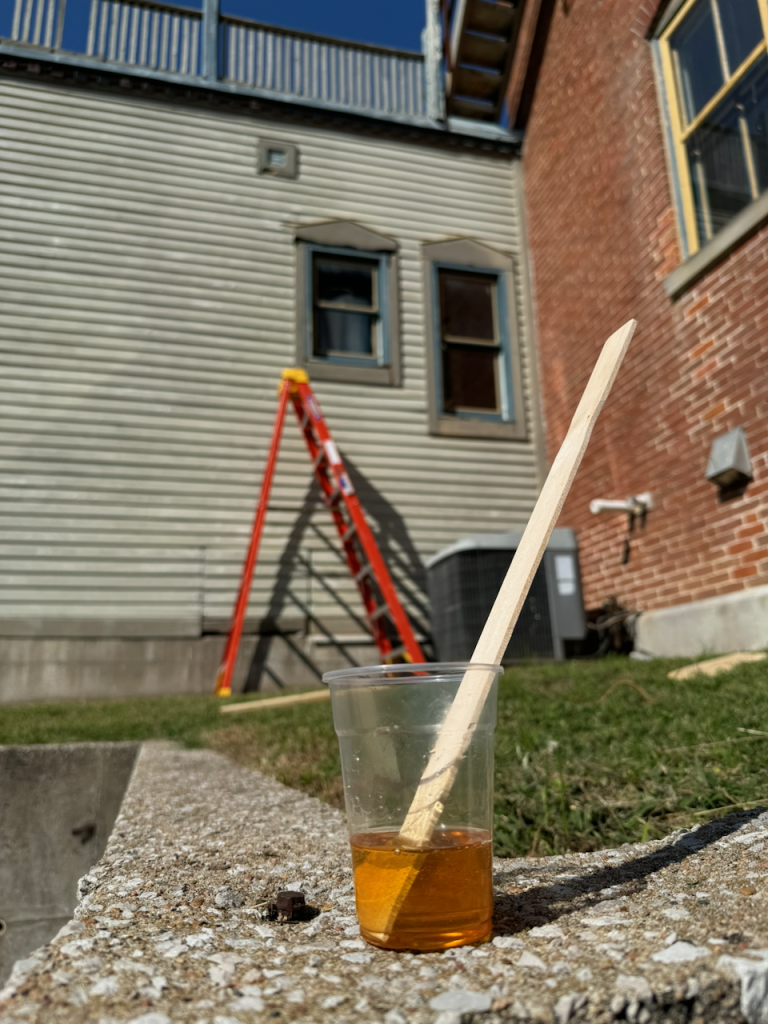
The system has two primary products: LiquidWood and WoodEpox. LiquidWood is a penetrating epoxy consolidant that hardens deteriorated wood and creates a stable base for the repair. WoodEpox is a two-part structural epoxy wood filler that contains no solvents. It bonds chemically to the original timber and cures without shrinking, creating a durable repair rather than simply filling the surface. Once cured, it can be shaped, sanded, drilled, and painted.
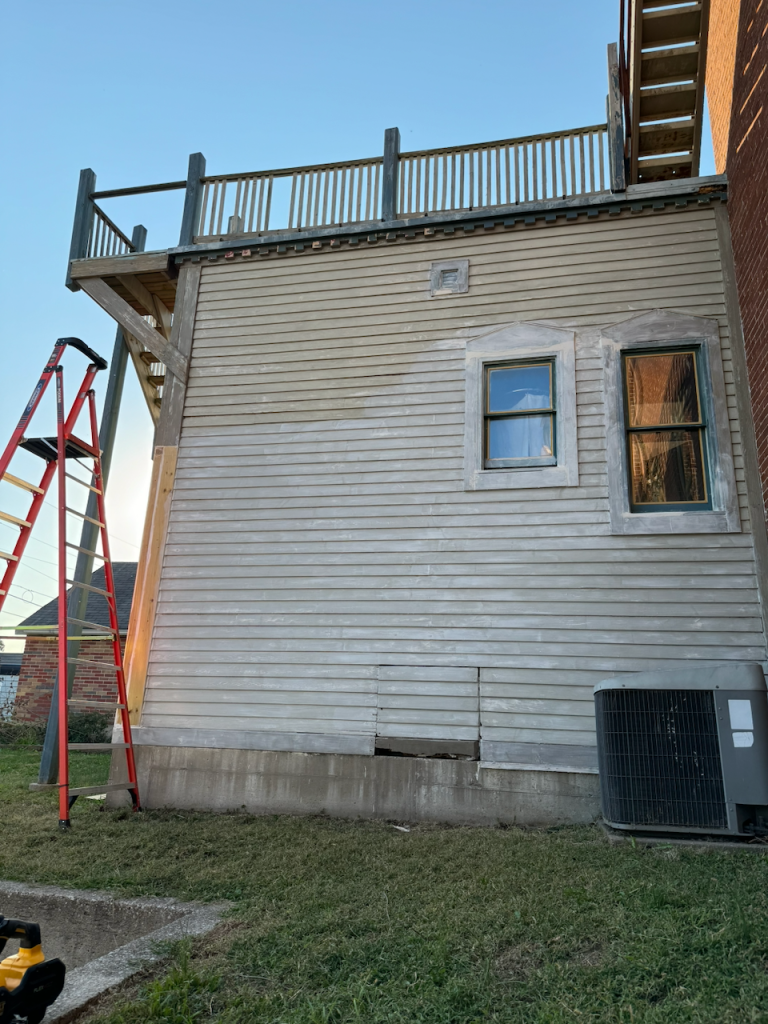
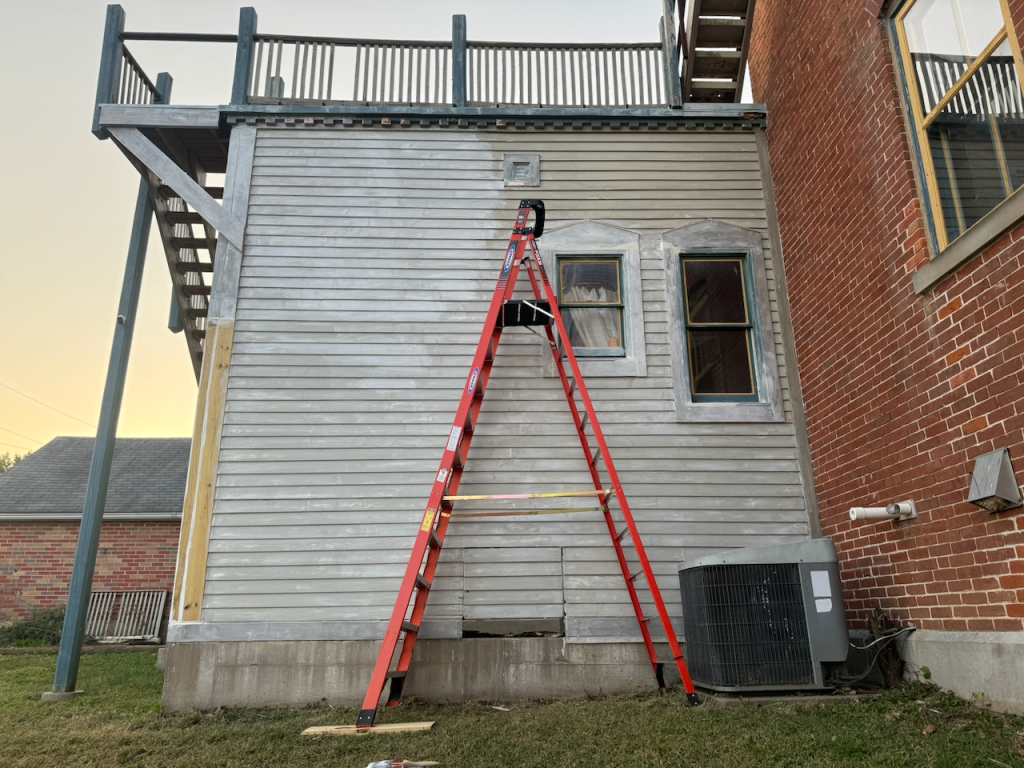
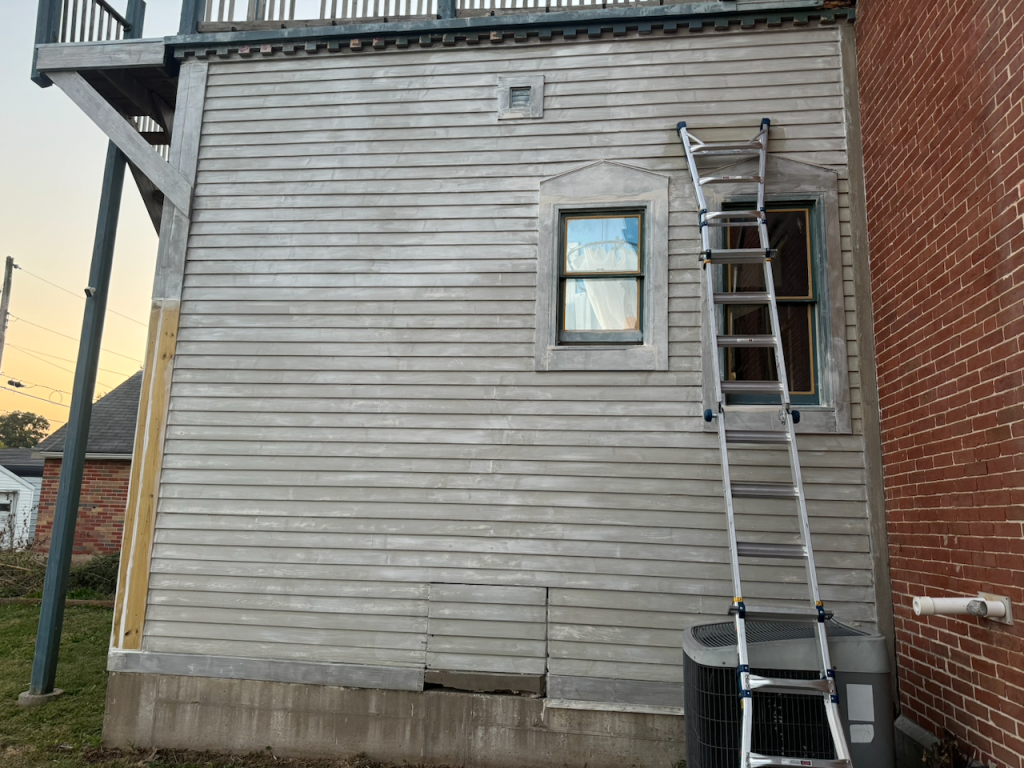
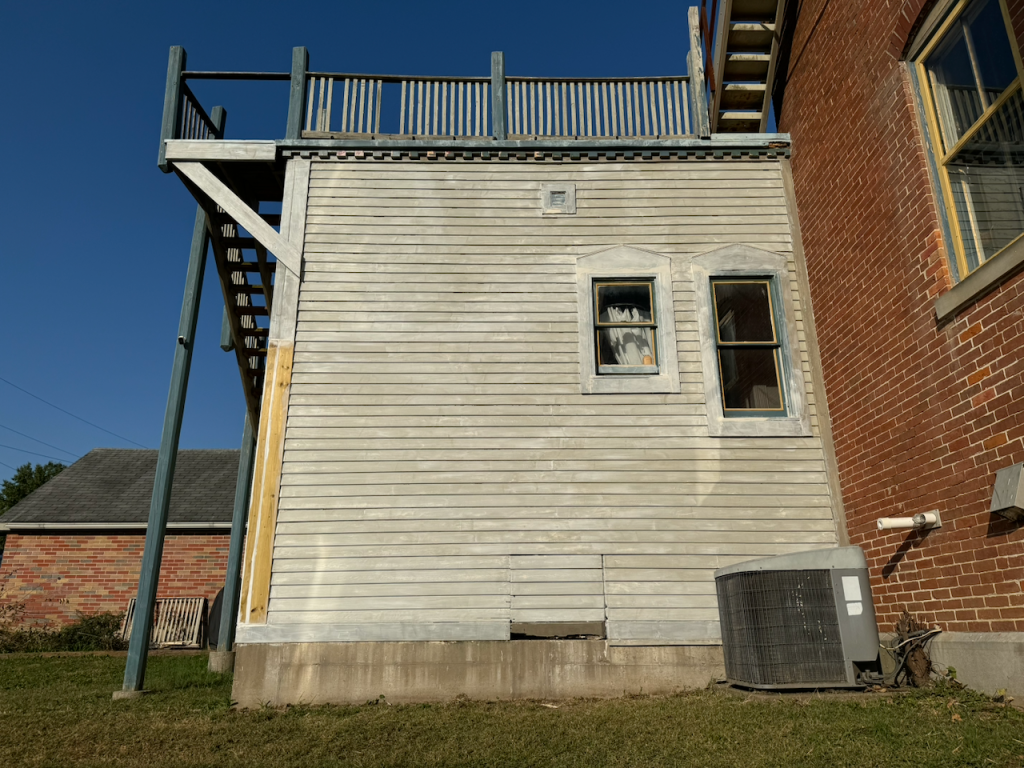
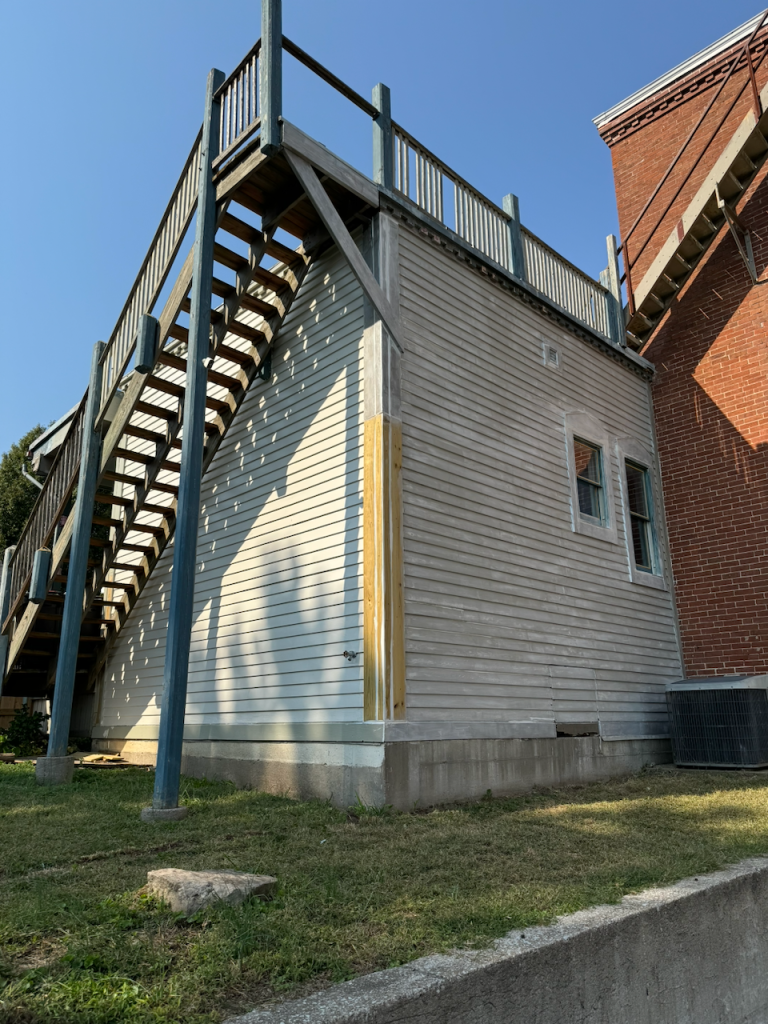
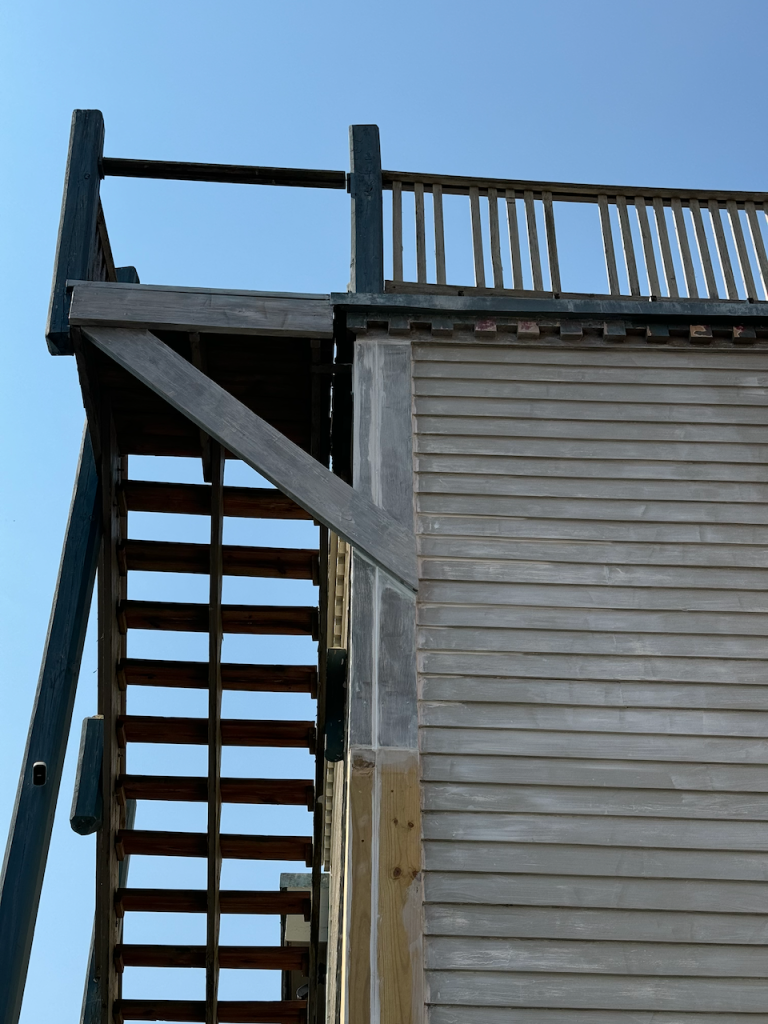
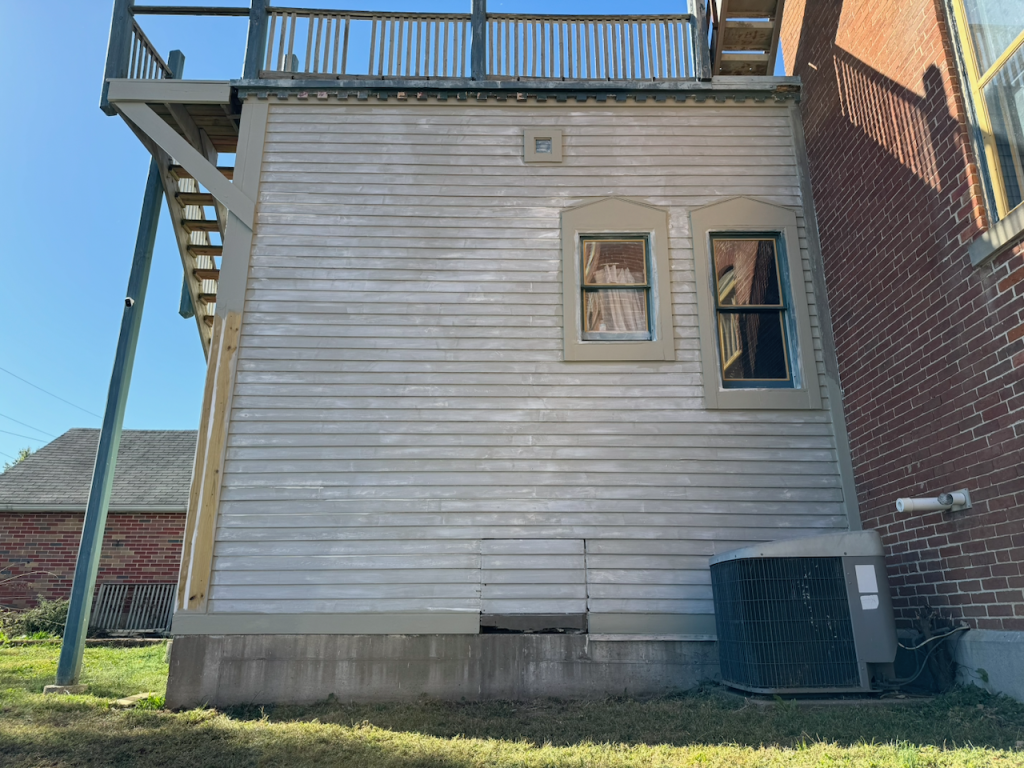
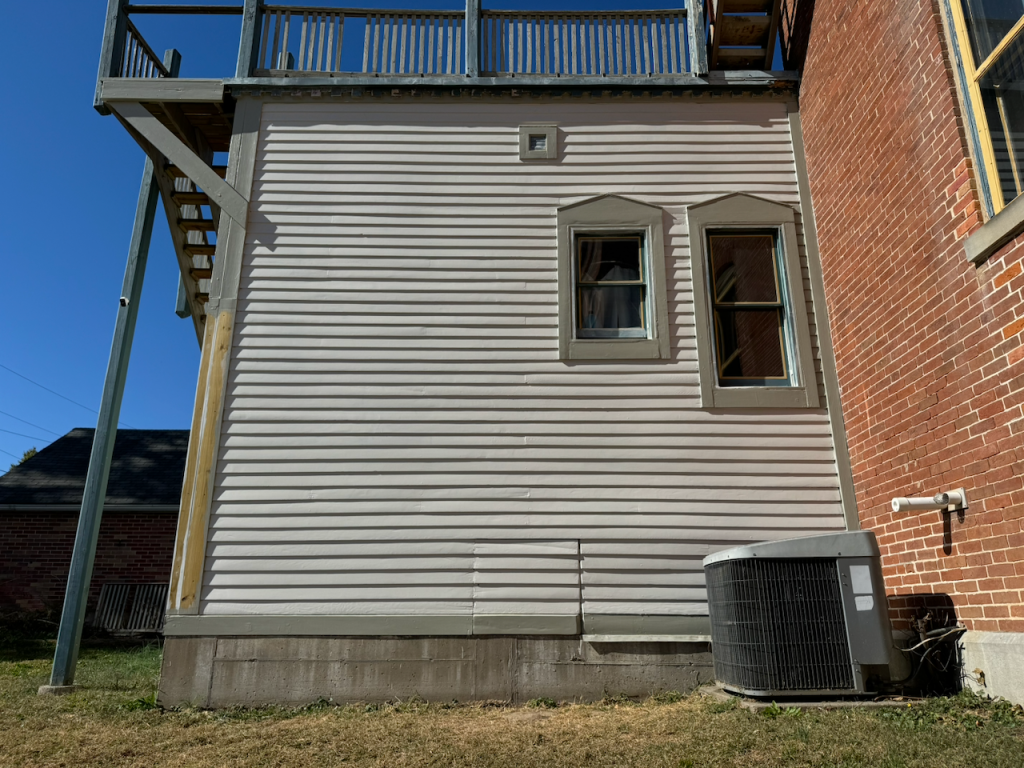
Because the replacement wood is pressure-treated, we’ll give it time to dry before priming and painting.
For now, the southern addition is watertight, the worst of the rot is behind us, and I may finally sleep a little easier. Fewer nightmares, at least.
Next, we’ll finish the new trim and turn our attention to the staircase, including the upper railing. Restoration never really ends. It simply moves on to the next challenge, which we hope is a little less severe.
Stay tuned.
One reply on “South Side Restoration: Part 1”
Thank you for documenting and sharing your progress. I enjoy reading and see the process.